Indian Judgements

Indian Judgements

High Court Quashes Criminal Chargesheet Against Former IOA Election Officer

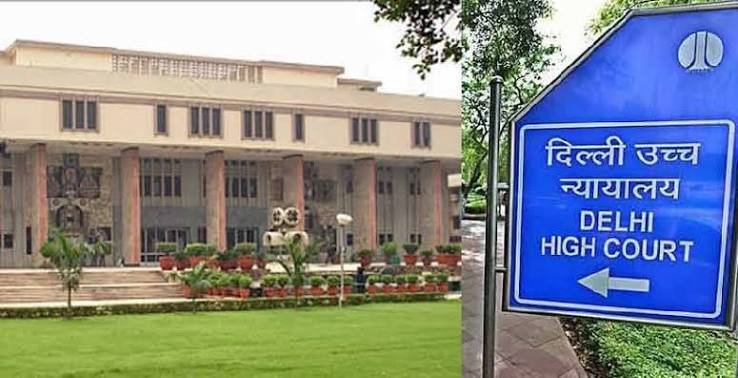
The present petition was filed under Section 482 of the Code of Criminal Procedure, 1973 (CrPC) seeking the quashing of a chargesheet in FIR No. 25/2021 registered at P.S. Special Cell for offences punishable under Sections 420, 120B, and 34 of the IPC, alongside Sections 66, 66C, and 66D of the Information Technology (IT) Act, as well as the consequential summoning order dated August 17, 2022 passed by the Chief Metropolitan Magistrate. The case originated from procedural disputes surrounding the 2020 virtual elections of the Indian Orthopaedic Association (IOA), where the petitioner served as the Vice-President and designated Election Officer. Upon evaluating the matter, the Delhi High Court held that the chargesheet and materials collected during investigation failed to disclose the essential statutory ingredients of cheating, conspiracy, or computer-related offences against the petitioner. Highlighting that mere administrative irregularities or procedural disagreements do not amount to criminal penal offences, the High Court allowed the petition and quashed all criminal proceedings against the petitioner.

  • Scope of Inherent Jurisdiction (Section 482 CrPC): The Court reiterated that even after a chargesheet is filed, it can examine whether the allegations and materials collected prima facie constitute the alleged offences under the first category established in State of Haryana v. Bhajan Lal.
  • Absence of Ingredients for Cheating (Section 420 IPC): The Court noted that the material lacked any elements of false representation, deception, or dishonest inducement by the petitioner at the inception. Furthermore, no person was identified as having been deceived or induced to deliver property, and no wrongful financial gain accrued to the petitioner.
  • Lack of Evidence for Conspiracy and Common Intention (Sections 120B and 34 IPC): The prosecution failed to establish any communication, shared criminal intent, or agreement between the petitioner and the technology vendor to manipulate the election results.
  • Inapplicability of IT Act Provisions (Sections 66, 66C, and 66D IT Act): The Court found no evidence that the petitioner engaged in unauthorized computer access, data alteration, password theft, or personation. Technical anomalies attributed to the voting platform’s backend were not linked to any command or direct action by the petitioner.
  • Impact of Civil Settlement: A comprehensive settlement was executed and recorded by the High Court in related civil proceedings ($CS(OS)$ 414/2020), wherein original complainants withdrew allegations and agreed to cooperate in quashing the FIR, representing a sterling quality of subsequent material supporting relief.


2026 DHC 6396

Dr. Ramesh Sen v. State Govt. of NCT of Delhi & Ors. (D.O.J. 07.08.2026)

2026 DHC 6396 click here to view full text of judgment

Next Story

Supreme Court Mandates Explicit Adjudication of Additional Evidence Applications in Appeals

The Supreme Court addressed a critical procedural lapse where the High Court of Karnataka dismissed a regular first appeal and cross-objections without explicitly deciding or considering a pending application for additional evidence filed under Order XLI Rule 27 of the Code of Civil Procedure, 1908 (CPC). The Apex Court held that failing to evaluate and pass a reasoned order on an application for additional evidence before delivering a final judgment constitutes a grave jurisdictional error and a severe miscarriage of justice. Consequently, the Supreme Court set aside the impugned judgment of the High Court and remanded the matter back for fresh disposal.

  • Factual Matrix:
    • Respondent Nos. 5 and 6 originally filed a partition suit (O.S. No. 485 of 1999, later renumbered as O.S. No. 86 of 2006) which was decreed by the Trial Court on September 12, 2006.
    • This led to the filing of RFA No. 2076 of 2006 by Respondent Nos. 1 to 4 and RFA Cross Objection No. 17 of 2012 by the Appellant (Defendant No. 1) before the High Court of Karnataka.
    • During the pendency of the appeal, the Appellant filed an application (I.A. No. 1/25) on October 28, 2025, to bring on record additional documents/evidence under Order XLI Rule 27 CPC.
    • On November 4, 2025, the High Court heard and reserved the matter for orders, ultimately dismissing the RFA and cross-objections on December 16, 2025, without rendering any specific adjudication on the pending additional evidence application.
  • Legal Principles and Precedents Relied Upon:
    • The Supreme Court reiterated established jurisprudence (referencing cases such as Jatinder Singh v. Mehar Singh, North Eastern Railway Administration v. Bhagwan Das, Namdeo v. Tukaram, Iqbal Ahmed v. Abdul Shukoor, and G. Shashikala v. G. Kalawati Bai) outlining that:
      • An appellate court has a statutory duty to deal with an application for additional evidence on its merits and cannot ignore it while pronouncing the final judgment.
      • The application must be considered simultaneously with the main appeal to evaluate if the documents are “required” to pronounce the judgment.
      • The court must pass a clear, reasoned order either allowing or rejecting the application.
      • Omitting to decide a pending application for additional evidence before dismissing an appeal amounts to a direct jurisdictional error and a procedural failure causing a miscarriage of justice.
  • Supreme Court’s Ruling:
    • The Supreme Court concurred that the High Court erred by omitting to refer to, consider, or adjudicate the vital application regarding crucial documents like previous judgments, bank loan discharges, and surveyor sketches.
    • The Civil Appeals were allowed, the High Court’s judgment dated December 16, 2025, was set aside, and RFA No. 2076 of 2006 along with cross-objections were restored to the file of the High Court for a fresh, lawful disposal in accordance with the law.

2026 INSC 816

Chowdappa v. Hanumantharayappa and Others (D.O.J. 06.08.2026)

2026 INSC 816 click here to view full text of judgment

Next Story

High Court Quashes Criminal Chargesheet Against Former IOA Election Officer

The present petition was filed under Section 482 of the Code of Criminal Procedure, 1973 (CrPC) seeking the quashing of a chargesheet in FIR No. 25/2021 registered at P.S. Special Cell for offences punishable under Sections 420, 120B, and 34 of the IPC, alongside Sections 66, 66C, and 66D of the Information Technology (IT) Act, as well as the consequential summoning order dated August 17, 2022 passed by the Chief Metropolitan Magistrate. The case originated from procedural disputes surrounding the 2020 virtual elections of the Indian Orthopaedic Association (IOA), where the petitioner served as the Vice-President and designated Election Officer. Upon evaluating the matter, the Delhi High Court held that the chargesheet and materials collected during investigation failed to disclose the essential statutory ingredients of cheating, conspiracy, or computer-related offences against the petitioner. Highlighting that mere administrative irregularities or procedural disagreements do not amount to criminal penal offences, the High Court allowed the petition and quashed all criminal proceedings against the petitioner.

  • Scope of Inherent Jurisdiction (Section 482 CrPC): The Court reiterated that even after a chargesheet is filed, it can examine whether the allegations and materials collected prima facie constitute the alleged offences under the first category established in State of Haryana v. Bhajan Lal.
  • Absence of Ingredients for Cheating (Section 420 IPC): The Court noted that the material lacked any elements of false representation, deception, or dishonest inducement by the petitioner at the inception. Furthermore, no person was identified as having been deceived or induced to deliver property, and no wrongful financial gain accrued to the petitioner.
  • Lack of Evidence for Conspiracy and Common Intention (Sections 120B and 34 IPC): The prosecution failed to establish any communication, shared criminal intent, or agreement between the petitioner and the technology vendor to manipulate the election results.
  • Inapplicability of IT Act Provisions (Sections 66, 66C, and 66D IT Act): The Court found no evidence that the petitioner engaged in unauthorized computer access, data alteration, password theft, or personation. Technical anomalies attributed to the voting platform’s backend were not linked to any command or direct action by the petitioner.
  • Impact of Civil Settlement: A comprehensive settlement was executed and recorded by the High Court in related civil proceedings ($CS(OS)$ 414/2020), wherein original complainants withdrew allegations and agreed to cooperate in quashing the FIR, representing a sterling quality of subsequent material supporting relief.

2026 DHC 6396

Dr. Ramesh Sen v. State Govt. of NCT of Delhi & Ors. (D.O.J. 07.08.2026)

2026 DHC 6396 click here to view full text of judgment

Next Story

High Court Dismisses Challenge Against Discharge in Matrimonial Dispute

The present petition was filed under Section 528 of the Bharatiya Nagarik Suraksha Sanhita, 2023 (BNSS) to challenge a judgment passed by the Additional Sessions Judge, which had dismissed a revision petition against a trial court order discharging respondent Nos. 2 to 5 from offences under Sections 498A, 406, 377, 509, and 34 of the IPC. The petitioner (complainant/wife) and respondent No. 2 were married in 2017 and later faced severe matrimonial discord, leading to an FIR and subsequent chargesheet. Upon reviewing the matter, the Delhi High Court evaluated whether the lower courts erred in discharging the respondents at the stage of framing charges. Finding no perversity, illegality, or jurisdictional error in the concurrent findings of the lower courts, the High Court dismissed the petition, ruling that the material on record failed to raise grave suspicion required to sustain charges for the alleged offences.

  • Scope at the Stage of Framing Charge: The Court reiterated that while a meticulous appreciation of evidence is unwarranted at the charge stage, the material collected during investigation must at least disclose a prima facie case or raise grave suspicion against the accused. Accused persons cannot be forced to undergo trial based solely on vague or omnibus allegations.
  • Cruelty and Harassment (Sections 498A, 323, and 509 IPC): Both the Trial Court and Revisional Court concurrently examined the allegations concerning dowry demands, physical assault, and verbal abuse. The High Court found no jurisdictional error in their conclusion that the ingredients for these offences were not met.
  • Criminal Breach of Trust (Section 406 IPC): The Trial Court noted a lack of clear and specific allegations regarding the entrustment of stridhan articles to the specific respondent, alongside the fact that the respondents expressed willingness to return admitted articles which the petitioner declined. Furthermore, a discrepancy was noted where charges were filed against an accused against whom no such allegations were levied.
  • Sexual Offences (Section 377 IPC): Regarding the allegations under Section 377 IPC, the Court observed that apart from the complainant’s standalone assertions, there was an absence of contemporaneous medical or supporting material (such as the MLC recording no external injuries due to a two-year delay) to substantiate the claim.
  • Inherent Jurisdiction (Section 528 BNSS): The High Court emphasized that its inherent jurisdiction cannot be utilized to substitute its own opinion or re-appreciate evidence in the absence of patent illegality, perversity, or miscarriage of justice.

2026 DHC 6382

XXXXXXXXXXX v. State of NCT of Delhi and Ors. (D.O.J. 07.08.2026)

2026 DHC 6382 click here to view full text of judgment

Next Story

Ensuring Equal Compensation for Displaced Landowners under the Same Notification

This civil appeal arose from a challenge to the High Court’s dismissal of a review petition concerning land acquisition compensation. The appellants’ agricultural lands in Bagalkot District, Karnataka, were acquired under the same Section 4(1) notification dated February 11, 1999, that applied to other landholders in Ravindra v. Special Land Acquisition Officer who were awarded ₹6,50,000 per acre. Although the appellants faced abnormal delays in pursuing higher judicial remedies, the Supreme Court invoked its jurisdiction under Article 142 of the Constitution of India to grant parity in compensation while denying interest for the prolonged periods of delay.

  • Parity in Land Compensation: The Supreme Court held that landowners whose properties are acquired under the exact same notification should not receive discriminatory treatment regarding compensation.
  • Application of Precedent: The appellants were extended the benefit of the rate of ₹6,50,000 per acre with statutory benefits, aligning with this Court’s earlier ruling in Ravindra and another v. Special Land Acquisition Officer, UKP, Bagalkot.
  • Exclusion of Interest for Delay: To balance the equities against the abnormal and unexplained delays by the appellants (totaling 4,427 days across different stages), the Court ruled that the appellants are not entitled to interest on the enhanced compensation for those specific periods of delay.
  • Invocation of Article 142: Recognizing that the appellants are agriculturists whose lands were taken for a project, the Supreme Court utilized its plenary powers under Article 142 of the Constitution to ensure substantial justice and set aside the lower decisions accordingly.

2026 INSC 815

Lachchappa and Others v. Special Land Acquisition Officer, UKP, Bagalkot and Others  (D.O.J. 07.08.2026)

2026 INSC 815 click here to view full text of judgment

Hi Judgments Online