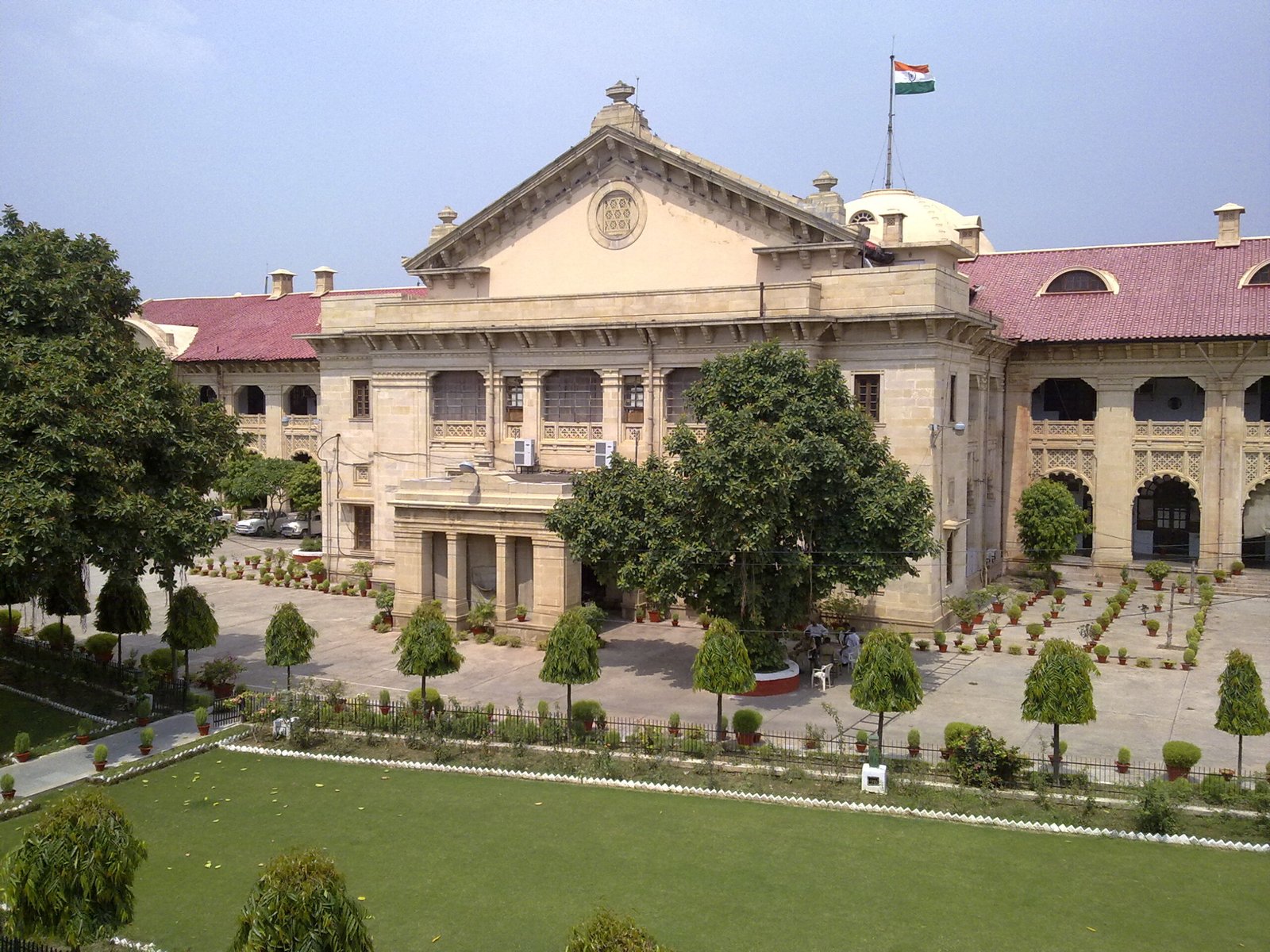
This criminal appeal arose from a judgment dated June 29, 1987, wherein the Special Judge/Additional Sessions Judge, Farrukhabad, convicted and sentenced the appellants under Section 302 read with Section 34 IPC to life imprisonment, and under Section 307/34 IPC to four years of rigorous imprisonment. During the pendency of the appeal, three of the appellants (Hari Ram, Srikant, and Umakant) passed away, leaving Ramakant as the sole surviving appellant. The Allahabad High Court scrutinized the evidentiary value of the First Information Report (FIR), the presence and conduct of eyewitnesses (PW-1 and PW-2), and the perfunctory nature of the police investigation. Finding the FIR to be ante-timed, the witness testimonies highly doubtful, and the core prosecution case unproven beyond a reasonable doubt, the Division Bench allowed the appeal, set aside the conviction, and acquitted the surviving appellant, discharging him from his bail bonds.
- Challenged Conviction and Abatement:
- The appeal originally challenged the conviction of four appellants handed down by the trial court on June 29, 1987, for murder and attempt to murder under Sections 302/34 and 307/34 of the IPC.
- Appellant nos. 1, 2, and 4 died during the proceedings, leading to the abatement of the appeal against them on July 9, 2018, leaving only appellant no. 3 (Rama Kant).
- Prosecution Case & Incident:
- According to the informant Triloki Nath (PW-1), on May 17, 1983, at around 9:15 a.m., he and his family members were attacked near Ram Kishan Vaidya’s shop by neighbors over business rivalry.
- During the altercation, firearms were allegedly discharged and knives were used, resulting in fatal injuries to Basant Lal and Raghuvir Prasad, while the informant sustained minor scratches.
- Key Issues for Determination:
- The Court evaluated whether the FIR was genuine or ante-timed/suspicious, whether PW-1 and PW-2 were present at the scene of the crime, and whether the death of the deceased was caused by the surviving appellant.
- Suspicious and Ante-Timed FIR:
- The High Court noted glaring over-writings in the inquest reports (Panchayatnamas, Exhibits Ka-13 and Ka-20) where time entries regarding the receipt of information and death were altered.
- Citing Supreme Court precedents like Meharaj Singh v. State of U.P. and Muslim v. State of U.P., the Court held that these unexplained anomalies and lack of prompt dispatch details rendered the FIR suspicious and robbed it of spontaneity.
- Doubtful Presence and Conduct of Eyewitnesses:
- PW-1 (Triloki Nath): The court found his narrative unnatural, noting that instead of rushing his critically wounded father and brother to the hospital, he engaged a scribe to write a tehrir His claim that the attackers hit him with the handle side of the blade intentionally to cause minor scratches appeared heavily concocted.
- PW-2 (Chandra Kishore): Identified as the brother-in-law of the deceased Raghuvir, his status as a chance witness was undermined by his unnatural conduct of leaving his severely injured relative at the police station to go home, alongside material contradictions in his testimony.
- Flawed and Perfunctory Investigation:
- The investigating agency failed to send the seized blood-stained earth, plain earth, and recovered clothes to the forensic science laboratory (FSL) for chemical analysis.
- Invoking the principle that an accused’s presumption of innocence cannot be compromised by inept police handling, the Court ruled that the benefit of these investigative lapses must go to the accused.
- Final Conclusion and Relief:
- The Court concluded that although the victims were killed, the prosecution failed to prove beyond reasonable doubt that the surviving appellant committed the crime, noting that the accused were likely falsely implicated due to business rivalry.
- Consequently, the criminal appeal was allowed, the judgment of conviction and sentence dated June 29, 1987, was set aside, and the surviving appellant Rama Kant was acquitted on the ground of benefit of doubt.
J.O. (Web) 2026 ALL 171
Hari Ram and others v. State of U.P. (D.O.J. 03.08.2026)
J.O. (Web) 2026 ALL 171 click here to view full text of judgment