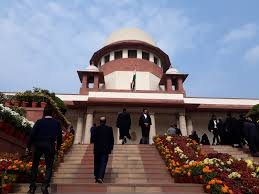
These consolidated appeals involved overlapping questions of law regarding an employee’s right to withdraw a tendered resignation and the legal effect of a subsequent ratification by a competent authority of an initially unauthorized acceptance. The respondent, an Assistant Registrar (Legal) at Delhi Technological University (DTU), had resigned, requested a waiver of the notice period, accepted his final settlement and certificates, and subsequently joined another institution (NITC), before attempting to withdraw his resignation months later on the grounds that the initial acceptance was done by an officer holding additional charge rather than the Board of Management (BOM). The Supreme Court allowed DTU’s appeal and dismissed the respondent’s cross-appeal and special leave petitions, holding that the subsequent ratification by the BOM related back to validate the initial acceptance, and that the employee was bound by his own conduct under the principle against approbation and reprobation.
- Nature of Proceedings: Civil appeals and special leave petitions arising from judgments of the High Court of Delhi and the High Court of Kerala concerning employment resignation disputes.
- Core Issues:
- Whether the acceptance of a resignation by an official holding additional charge (who lacked initial authority under Section 23(2)(ix) of the Delhi Technological University Act, 2009) was validated by subsequent ratification from the Board of Management (BOM).
- Whether an employee who acts upon his resignation, accepts settlement benefits, and secures a new job can later invalidate the resignation based on a technical defect.
- Whether the High Court of Kerala’s Division Bench was justified in upholding NIT Calicut’s acceptance of resignation and its rejection of the employee’s withdrawal request.
- Supreme Court’s Legal Findings & Doctrines Applied:
- Doctrine of Ratification: Subsequent ratification by a competent authority (ratihabitio mandato aequiparatur) operates retrospectively (relates back to the date of the original act) to cure defects of authority, treating the act as valid from its inception.
- Approbation and Reprobation: An employee cannot “have his cake and eat it too” by taking full settlement benefits, experience certificates, and securing alternative gainful employment, and later turning around to treat his resignation as a nullity due to internal administrative technicalities.
- Effectiveness Under Statute: Under provisions such as Statute 30 of the NIT First Statutes, 2009, a resignation takes effect upon acceptance by the appointing authority, and non-communication or a pending notice period does not keep the resignation open for unilateral withdrawal.
- Discretion to Refuse Withdrawal: Where regulations permit, the competent authority retains the rational discretion to reject a withdrawal request, especially when it is found to be opportunistic rather than genuine.
- Final Outcome:
- Civil Appeal No. 9308 of 2024 (DTU’s appeal) was allowed, and the Delhi High Court’s judgment directing reinstatement was set aside.
- Civil Appeal No. 9309 of 2024 (employee’s appeal for back wages) was dismissed.
- Special Leave Petition (C) Nos. 625-626 of 2021 (challenge against NIT Calicut) was dismissed.
2026 INSC 797
Delhi Technological University v. B.S. Rawat (D.O.J. 04.08.2026)