Indian Judgements

Indian Judgements

Justice for the Defenceless: Criminal Appeal Dismissed and Conviction Upheld in a Brutal Stabbing Case

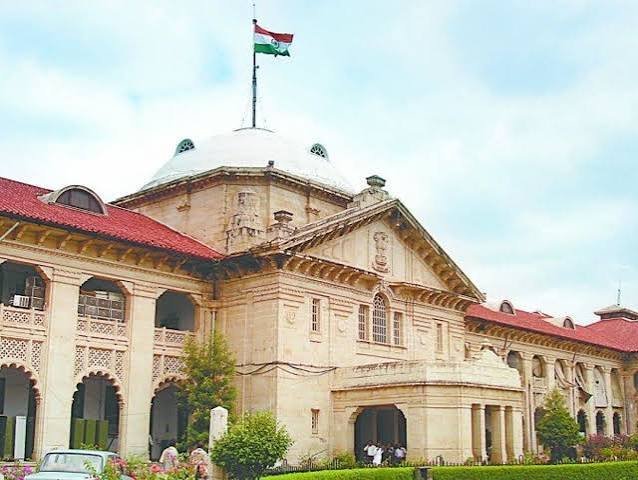
This criminal appeal under Section 374(2) of the Cr.P.C., delivered by Hon’ble Santosh Rai, J. at the High Court of Judicature at Allahabad, challenges the trial court judgment and order dated November 27, 1982. The case involves a brutal assault that took place on May 19, 1982, wherein the appellant, Gajendra, armed with a knife, trespassed into the home of the sole victim, Km. Rekha, and inflicted ten incised wounds on her body with the intent to cause her death. The High Court meticulously evaluated the sole testimony of the injured witness alongside medical evidence and hostile witness admissions, ultimately dismissing the appeal, upholding the conviction under Sections 307 and 452 of the IPC, and ordering the appellant to surrender to serve out his sentence.

Summary of Judgment

  • Prosecution Case & Incident: On May 19, 1982, at approximately 9:30 a.m., the appellant entered the victim’s house in village Bharera while she was alone and washing pulses, and inflicted ten incised wounds with a knife. The victim was immediately taken to the District Hospital, Bijnor, where Dr. V.K. Goel (P.W.4) recorded her injuries.
  • Trial Court Findings: The trial court convicted the appellant under Sections 452 and 307 IPC, sentencing him to five years of rigorous imprisonment for Section 307 IPC and two years of rigorous imprisonment for Section 452 IPC (to run concurrently).
  • Reliability of Injured Witness: The Court reaffirmed that the testimony of an injured witness carries an inherent guarantee of truthfulness and does not require corroboration unless strong doubts exist. P.W.1’s account was found wholly reliable, natural, and fully corroborated by medical evidence and partial admissions from hostile witnesses (P.W.3).
  • Ingredients of Section 307 IPC: The Court held that the premeditated entry, choice of deadly weapon, and multiple targeted wounds (including near the face and chest, alongside defensive wounds) clearly established the requisite intention and knowledge to constitute an attempt to commit murder.
  • Sentencing & Final Order: The appellant’s prayer for sentence reduction or the benefit of the Probation of Offenders Act was rejected due to the extreme brutality of the crime. The appeal was dismissed in its entirety, the bail bonds were canceled, and the appellant was directed to surrender within two weeks to serve the remaining sentence.

J.O. (Web) 2026 ALL 110

Gajendra v. State (D.O.J. 16.07.2026)

J.O. (Web) 2026 ALL 110 click here to view full text of judgment

Next Story

Protecting Those Who Heal: Canceling Bail for Assailants in a Hospital Attack

In this appeal filed by the State of Maharashtra, the Supreme Court addressed the brazen assault on doctors and medical staff by an elected municipal corporator and his associates inside the Labour Ward of a municipal hospital in Dombivli. The Bombay High Court had initially stayed bail orders granted by the magistrate, but subsequently released the respondents on bail with stringent conditions. Setting aside the High Court’s order permitting bail, the Supreme Court canceled the bail granted to the respondents, emphasizing that the rule of law must prevail over political influence and that medical professionals must be safeguarded from intimidation and violence while discharging their duties. The Court directed the respondents to surrender, ordered a fast-tracked trial within six months, and mandated strict witness protection.

  • Sanctity of the Doctor-Patient Relationship: The Court underscored that medical professionals operate under immense pressure and require an environment free from coercion, fear, and physical violence to exercise independent professional judgment.
  • Abuse of Public Office: The Court strongly criticized elected representatives who misuse their electoral mandate as personal authority to command, threaten, or intimidate public functionaries and citizens.
  • Ignored Criminal Antecedents: The lower courts failed to properly weigh the criminal background of Respondent No. 1 (who had 17–18 registered cases against him) and his hospital-ward confinement strategy, which vitiated the proper exercise of judicial discretion in granting bail.
  • Wider Societal and Professional Impact: The Court noted that the incident caused severe trauma, forcing a victim lady doctor to resign and creating an atmosphere of fear across the medical fraternity, which the High Court had improperly minimized.
  • Cancellation of Bail and Surrender: The Supreme Court set aside the High Court’s order relaxing bail, canceled the bail of Respondents No. 1 to 4, and directed them to surrender before October 5, 2026.
  • Expedited Trial and Witness Protection: The trial before the Special Fast-Track Court must conclude within six months. Furthermore, the trial court was directed to provide comprehensive witness protection and security measures for the doctors and hospital staff under the Maharashtra Witness Protection and Security Act, 2017.

2026 INSC 1075

State of Maharashtra v. Ramesh Sukrya Mhatre and Ors. (D.O.J. 28.09.2026)

2026 INSC 1075 click here to view full text of judgment
Next Story

Shadows of Circumstantial Doubt: Upholding Acquittal in a Double Murder Case

In this criminal appeal filed by the State of Himachal Pradesh, the Supreme Court examined whether the High Court was justified in setting aside the trial court’s judgment convicting and sentencing the respondent-accused under Section 302 of the Indian Penal Code, 1860, for the double murder of her stepmother and minor stepbrother. The prosecution relied heavily on circumstantial evidence, including the “last seen” theory, taxi travel logs, hotel stays, recovery of keys and a mobile phone via disclosure, and DNA profile matching of bloodstains found at the crime scene. Upon re-evaluating the record, the Supreme Court held that the prosecution failed to establish a complete and unbroken chain of circumstances pointing exclusively to the guilt of the accused. Finding serious investigational lapses—such as omitted mobile tower locations, untrustworthy corroborative witnesses, and non-conclusive forensic links—the Court upheld the High Court’s acquittal and dismissed the appeal.

  • Homicidal Death and Timing: While autopsy confirmed homicidal death by strangulation 5 to 7 days prior to the post-mortem, the timeline did not conclusively restrict the time of death to the intervening night of August 31 and September 1, 2011.
  • “Last Seen” Theory: The sole witness to the last seen circumstance (PW-1, the father of the deceased) made material improvements from his previous Section 161 CrPC statement, and his long delay in reporting the locked house rendered his testimony unconvincing.
  • Taxi and Hotel Evidence (PW-4 and PW-18): The testimonies regarding the accused hiring a taxi to Diur and staying at a Chamba hotel were deemed untrustworthy, as the investigating officer failed to explain what prompted recording their statements, and no hotel guest registers were produced.
  • Lock Breaking and Key Recoveries: The prosecution failed to establish that the lock produced in court was the exact lock hanging on the door’s latch rather than its handle, rendering the subsequent discovery of keys inconsequential.
  • Mobile Phone Recovery and CDR Lapses: The failure of the investigating agency to retrieve and exhibit the complete Call Detail Records (CDR) along with mobile tower locations represented a severe investigational lapse, obscuring the actual location and active status of the devices.
  • DNA Profile Matching: Although the DNA profile from a blood scrape on a cabinet matched the accused’s blood sample, this was not conclusive because the accused was a regular visitor to the house, and no blood of hers was found on the victims’ clothing or the murder weapon.
  • Absence of Motive: The prosecution failed to prove any formal property bequest in favor of the minor deceased, weakening the alleged financial motive for the crime.

2026 INSC 1074

State of Himachal Pradesh v. Anchla @ Chanchla (D.O.J. 01.10.2026)

2026 INSC 1074 click here to view full text of judgment
Next Story

Broken Chains of Circumstantial Evidence: Acquittal in a Child Sexual Assault and Murder Case

In this criminal appeal, the appellant challenged his conviction and sentence of life imprisonment under Sections 376(2)(i), 302, and 201 of the Indian Penal Code, 1860, as well as Sections 4 and 6 of the Protection of Children from Sexual Offences Act, 2012, which had been concurrently upheld by the Sessions Court and the High Court of Sikkim. The Supreme Court reviewed the circumstantial evidence presented by the prosecution—including the “last seen” theory, Section 27 recoveries, DNA reports, FSL results, and the appellant’s statement under Section 313 of the Code of Criminal Procedure, 1973. Finding that the chain of circumstances was broken and incomplete at multiple points, and that the DNA and forensic reports did not link the appellant or recovered remains to the victim, the Court gave the appellant the benefit of the doubt, set aside the lower court judgments, and ordered his immediate acquittal.

  • “Last Seen” Theory: Prosecution witnesses were uncertain whether the appellant and the victim left the house together, and a long time gap of roughly six months elapsed between when they were allegedly last seen and when skeletal remains were discovered, making the theory unreliable.
  • Section 27 Recoveries: Articles were recovered from an open spot frequented by cattle herders and people collecting fodder; while accessibility does not automatically vitiate a recovery, it must be evaluated with caution when the location is ordinarily visible.
  • DNA and FSL Reports: The DNA analysis concluded that the recovered bone fragments were of human male origin, whereas the victim was a female, and they did not match the blood samples of the victim’s mother or sister. The Regional FSL report was similarly inconclusive regarding blood and hair samples.
  • Brown Shawl: The victim’s grandmother and the investigating officer could not confirm that the brown shawl allegedly used during the crime belonged to the appellant’s family or the household.
  • Statement Under Section 313 CrPC: Because the primary circumstantial evidence failed to establish a complete chain, the appellant’s responses and silence could not be used to fill the gaps or serve as a substantive piece of evidence to sustain a conviction.

2026 INSC 1073

Santosh Gurung v. State of Sikkim (D.O.J. 01.10.2026)

2026 INSC 1073 click here to view full text of judgment
Next Story

Unrelied Documents and the Stage of Production: Navigating CBI Investigations

This criminal appeal, filed by the Central Bureau of Investigation (CBI), challenged orders directing the prosecution to produce certain “unrelied” documents at the stage of framing charges. The Supreme Court addressed the extent to which an accused can seek various documents—ranging from seizure memos and dispatch registers to source information reports and meeting minutes—under Section 91 of the Code of Criminal Procedure, 1973 (CrPC). Noting that the respondent-accused had already given up claims over confidential source information and internal registers, the Court set aside the impugned orders to facilitate an expeditious trial. It established practical pathways for inspecting voluminous unrelied documents and securing missing records either through inspection or during the defense stage.

  • Seizure Memos (Clause a): The CBI has already submitted photocopies of all seizure memos through which documents were seized during the investigation.
  • Internal Registers and Source Information (Clauses b, c, d): These involve internal CBI registers and confidential source information reports which cannot be divulged; furthermore, the accused withdrew requests concerning these items.
  • Voluminous Unrelied Documents (Clause e): Since the unrelied-upon documents are voluminous, the CBI must permit the accused or their authorized representative to inspect them. The accused can specify required documents during inspection (reduced to writing and signed by both parties) for production before the Trial Court, or examine them and seek production when the relevant witness is examined during trial.
  • Building Committee Meeting Minutes (Clause f): While the CBI stated that only the 11th meeting minutes are relied upon, if other specific minutes are present in the voluminous records, they can be sought as directed. If they are unavailable with the CBI, the accused is entitled to procure them via the Right to Information Act, 2005, or by producing a defense witness, with evidentiary value to be assessed by the Trial Court.
  • Missing Records and Dropped Entities (Clauses g, h, i, j): Documents claimed to be unavailable with the CBI (such as specific videography, uncollected technical bids, or appointment files of entities dropped from the chargesheet) cannot be compelled for production by the prosecution.

2026 INSC 1064

Central Bureau of Investigation v. Anil Dixit (D.O.J. 25.09.2026)

2026 INSC 1064 click here to view full textb of judgment

Hi Judgments Online