
Indian Judgements

Indian Judgements

Magistrate’s Power to Take Cognizance and Reject Police Final Reports

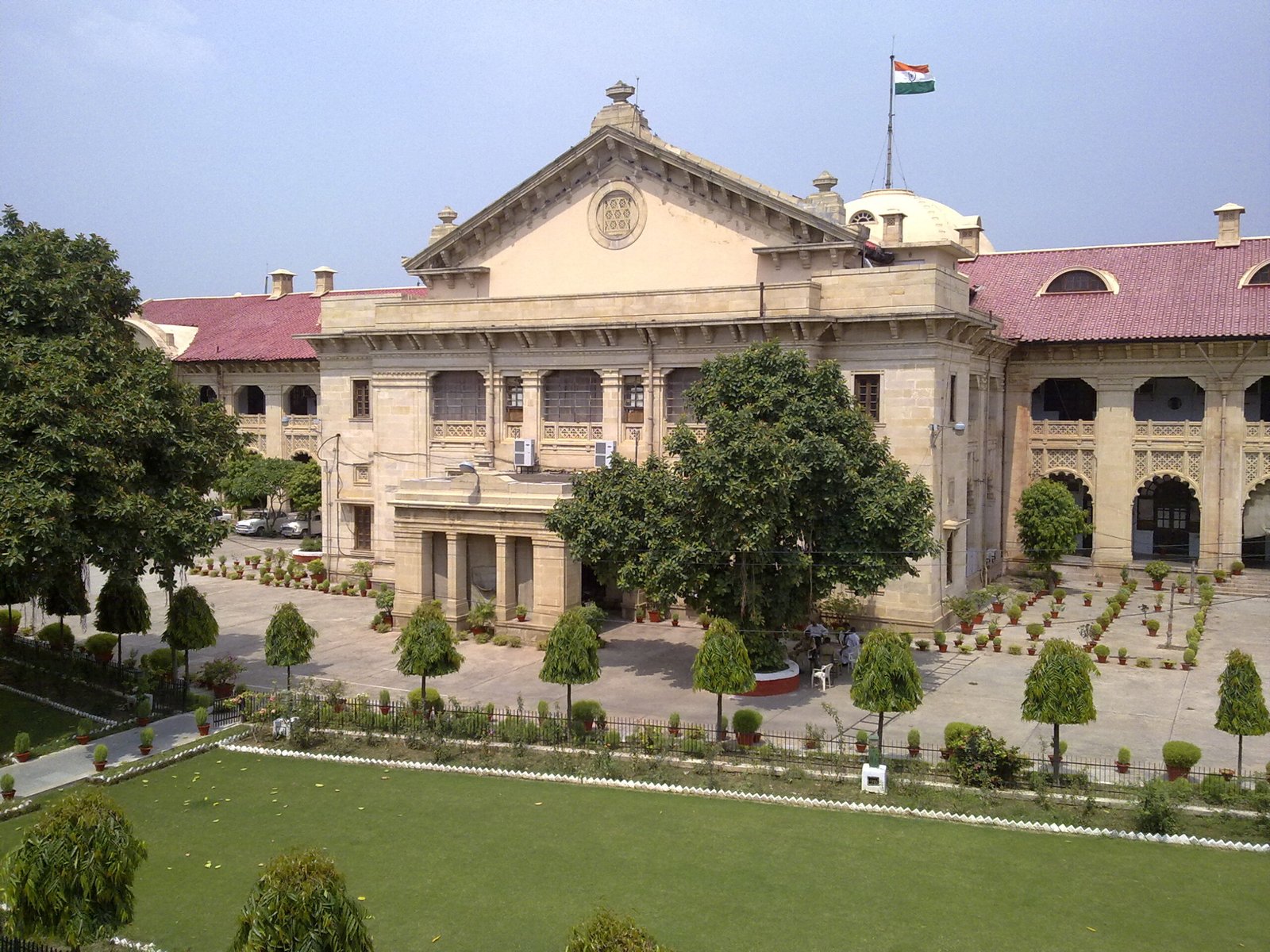
This criminal miscellaneous application was filed under Section 528 of the Bharatiya Nagarik Suraksha Sanhita, 2023 (BNSS) seeking to quash an order dated February 17, 2025, passed by the Special Judge (POCSO Act)/Additional District and Sessions Judge, Aligarh, along with a subsequent non-bailable warrant order. The trial court had allowed a protest petition filed by the informant, rejected the final report submitted by the police, and summoned the applicants to face trial under Sections 376D and 342 of the IPC and Sections 3/4 of the POCSO Act. The Allahabad High Court evaluated whether a Magistrate can take cognizance and issue process based on the victim’s statements under Sections 161 and 164 of the Cr.P.C. despite a police final report favoring a plea of alibi. The High Court dismissed the application, holding that an investigating officer cannot unilaterally decide a plea of alibi at the investigation stage by ignoring victim statements, and that the burden of proving an alibi rests squarely on the accused during the trial itself.

  • Factual Background:
    • A First Information Report (FIR) was registered regarding the alleged kidnapping and gang rape of the informant’s minor daughter.
    • During the investigation, the victim supported the prosecution’s allegations in her statements recorded under both Section 161 and Section 164 of the Cr.P.C.
    • However, the Investigating Officer (I.O.) submitted a final report after considering tower location details and defense witnesses who favored a plea of alibi for the applicants.
    • The informant filed a protest petition, which the trial court accepted, choosing to summon the applicants to face trial.
  • Legal Issues Raised:
    • Whether a Magistrate is legally competent to take cognizance under Section 190(1)(b) of the Cr.P.C. and issue process against an accused when the police report recommends a final closure/drop of proceedings.
    • Whether a plea of alibi and call detail records can be evaluated by the High Court or Investigating Officer to quash criminal proceedings at the threshold/summoning stage.
  • Core Observations of the High Court:
    • Magistrate’s Independent Power: A Magistrate is fully empowered to ignore the conclusions of an investigating officer, independently review statements of witnesses (such as the victim’s statements under Sections 161 and 164 Cr.P.C.), take cognizance under Section 190(1)(b), and issue process if a prima facie case is disclosed.
    • Impropriety of Accepting Alibi at Investigation Stage: The I.O. committed a gross error by unilaterally acting on a plea of alibi and ignoring substantive victim statements pointing to the crime.
    • Burden of Proof for Alibi: The plea of alibi must be strictly proven by the accused through evidence during the course of the trial, affording the prosecution a chance to cross-examine defense witnesses. It cannot be used to prematurely scuttle a criminal trial under Section 482 Cr.P.C. / 528 BNSS.
    • Restraint in Quashing: Criminal proceedings cannot be nipped in the bud through inherent powers unless allegations are patently frivolous, which was not the case here involving cognizable sexual offenses under the POCSO Act.
  • Final Decision:
    • The High Court refused to interfere with the trial court’s summoning order or exercise its inherent powers to quash the proceedings.
    • The application under Section 528 BNSS was dismissed.

J.O. (Web) 2026 ALL 81

Rajvir And Another Versus State Of U.P. And 3 Others (Application U/S 528 BNSS No. 28703 of 2025) (D.O.J. 10.07.2026)

J.O. (Web) 2026 ALL 81 click here to view full text of judgment
Next Story

Proving Adultery at the Threshold: Supreme Court Rules on Interim Maintenance and Private Investigation Evidence

In this criminal appeal, the Supreme Court examined whether a husband’s application under Section 125(4) of the Code of Criminal Procedure, 1973 (CrPC) alleging adultery by the wife can be deferred until the final adjudication of the main maintenance proceedings, or if it must be considered at the threshold when determining interim maintenance. The appellant-husband had opposed interim maintenance by presenting electronic evidence (photographs and videos) indicating an adulterous relationship, but the lower courts dismissed his application on the grounds that such allegations could only be proved during final trial. The Supreme Court allowed the appeal, set aside the High Court’s order, and remanded the matter to the Trial Court. The Court held that if a husband presents clear, cogent, and ex-facie evidence at the threshold establishing adultery, interim maintenance can be barred or suspended, and such applications cannot be routinely postponed to the final judgment. Additionally, the Supreme Court highlighted the legal lacuna surrounding unregulated private detective agencies and directed that a copy of the judgment be forwarded to the Ministry of Law and Justice and the Law Commission of India for appropriate legislative consideration.

  • Nature and Object of Section 125 CrPC: Proceedings under Section 125 CrPC are summary and civil in nature, designed to prevent vagrancy, destitution, and neglect by ensuring a dignified life for dependents through social justice.
  • Bar Under Section 125(4) CrPC: Section 125(4) acts as an exception, explicitly barring a wife from receiving maintenance (interim or final) if she is living in adultery, refuses to live with her husband without sufficient reason, or lives separately by mutual consent.
  • Timing of Section 125(4) Adjudication: An application under Section 125(4) does not have to wait until the final conclusion of the main petition. If the husband produces ex-facie, clear evidence establishing adultery or mutual consent at the threshold, interim maintenance is impacted; if evidence requires formal proof, interim maintenance continues in the interregnum until the Section 125(4) application is decided.
  • Evidentiary Standard for Electronic Records: Evidence procured through private investigators (such as digital photographs and videos) must satisfy strict admissibility and verification standards, including compliance with Section 65B of the Indian Evidence Act / Bharatiya Sakshya Adhiniyam (BSA) and the foundational tests of relevancy and accuracy.
  • Need for Regulation of Private Investigators: Acknowledging the absence of statutory regulation for private detective agencies in India, the Supreme Court directed the Ministry of Law and Justice and the Law Commission of India to examine the framework for regulating private investigators, balancing evidence collection with privacy and data protection rights.

2026 INSC 778

Himanshu Chordia v. State of Rajasthan & Anr. (D.O.J. 31.07.2026)

2026 INSC 778 click here to view full text of judgment

Next Story

Supreme Court Bars Late-Stage Counter-Claim Court Fee Deposit After Conclusion of Evidence

In this civil appeal, the Supreme Court examined the legality of an order permitting a defendant to pay court fees on a counter-claim with a delay of four years, specifically after the entire evidence in the suit had been closed. When the written statement and counter-claim were initially filed, the defendant did not pay the required court fees due to financial constraints, and only the written statement was taken on record, leaving the counter-claim non-existent. Years later, after the plaintiff’s evidence and the cross-examination of PW1 concluded, the trial court permitted the defendant to deposit the court fees and prosecute the counter-claim. The Supreme Court allowed the appeal and set aside the orders of the High Court and Trial Court, holding that since the counter-claim was never formally on record and the trial had already concluded, introducing it at that belated stage violated the strict parameters of Order VI Rule 17 of the Civil Procedure Code, 1908 (CPC), as no due diligence or foundational grounds were established.

  • Non-Existence of Counter-Claim Without Court Fees/Taking on Record: Where a defendant fails to pay court fees upon raising a counter-claim and explicitly requests the court to take only the written statement on record due to lack of financial capacity, the counter-claim does not legally exist on record.
  • Limits of Section 149 CPC: While Section 149 CPC grants courts the discretionary authority to allow the payment of deficient court fees at any stage of the suit, it presupposes that the pleading or claim itself is validly and properly on record.
  • Application of Order VI Rule 17 CPC Post-Trial: Introducing a counter-claim after the conclusion of trial amounts to an amendment of the pleadings. Under the proviso to Order VI Rule 17 CPC, such amendments post-commencement of trial are barred unless the party proves that, despite due diligence, they could not have raised the matter earlier.
  • Prejudice to the Plaintiff: Permitting a counter-claim after the entire evidence is closed causes severe prejudice, as the plaintiff has had no opportunity to adduce evidence to controvert the new claims.
  • Final Direction of the Supreme Court: The Supreme Court allowed the appeal, set aside the High Court’s affirmation of the trial court’s order, and directed that the suit shall proceed and be adjudicated strictly without the counter-claim.

2026 INSC 777

IJM Corporation Berhad v. M/s Lakshmi Sai Constructions Company and Anr. (D.O.J. 28.07.2026)

2026 INSC 777 click here to view full text of judgment
Next Story

Navigating Discretionary Equity: Supreme Court Restores Trial Court Decree Denying Specific Performance

In this civil appeal arising from a property transaction spanning over two decades, the Supreme Court examined the limits of appellate interference with the discretionary and equitable relief of specific performance under Section 20 of the Specific Relief Act, 1963. The sole appellant (original defendant) had entered into an agreement to sell a property in Udhagamandalam for ₹2,25,00,000, but the transaction collapsed amid allegations of bounced cheques, mutual lack of candor, inconsistent pleadings, and criminal complaints. While the trial court decreed only a refund of the advance amount of ₹85,00,000 with interest, the High Court reversed it and granted specific performance. The Supreme Court allowed the appeals, set aside the High Court’s judgment, and restored the trial court’s decree. It held that the plaintiffs failed to prove continuous readiness and willingness, approached the court with unclean hands due to retaliatory criminal proceedings, took contradictory stances regarding property assignment, and that the long passage of time combined with the advanced age of the appellant rendered specific performance inequitable.

  • Scope of Order XLI Rule 22 CPC: A respondent supporting a decree can impugn an adverse finding without filing cross-objections, provided they seek no relief beyond what the decree already grants.
  • Maintainability Without Declaration: Where an agreement does not confer a contractual right of unilateral termination, such termination amounts to repudiation, and the aggrieved party may sue for specific performance without seeking a separate declaratory relief as to the invalidity of the cancellation.
  • Continuous Readiness and Willingness: The plaintiff in a specific performance suit must prove continuous readiness and availability of funds from the date of the agreement up to the date of the decree. Dishonour of advance cheques and absence of concrete fund-raising material at the time of the suit demonstrate a lack of continuous financial readiness.
  • Conduct and “Clean Hands” Principle: Specific performance is an equitable and discretionary remedy. Plaintiffs who adopt contradictory stands across litigation (such as blowing hot and cold regarding assignment of rights) and file retaliatory criminal complaints seeking recovery of money rather than upholding the contract are not entitled to equitable relief.
  • Hardship and Delay: An inordinate lapse of time (over two decades), coupled with the advanced age of the vendor and the death of a key plaintiff, constitutes severe hardship and makes specific performance inequitable, warranting the restoration of the trial court’s alternative remedy of refund with interest.

2026 INSC 776

V.N.A.S. Chandran v. S. Venila and Others (D.O.J. 31.07.2026)

2026 INSC 776 click here to view full text of judgment

Next Story

Safeguarding Fair Trial Rights: Supreme Court Sets Aside Conviction Due to Non-Compliance with Section 299 CrPC

In this criminal appeal, the Supreme Court addressed whether evidence recorded during a trial against one co-accused can be used against an absconding co-accused who was apprehended and tried later, when the mandatory statutory safeguards under Section 299 of the Code of Criminal Procedure, 1973 (CrPC) were ignored. The appellant had absconded following a murder in 1999 while the co-accused was tried and acquitted. Years later, after the appellant was arrested and tried, the lower courts relied on the deposition of a crucial eyewitness (PW1) from the earlier trial who had since passed away. The Supreme Court allowed the appeal and acquitted the appellant, holding that in the absence of a formal, reasoned order satisfying the twin jurisdictional requirements of Section 299 CrPC during the initial trial stage, prior testimonies cannot be legally used to deprive an accused of their invaluable right to cross-examination.

  • Two-Part Nature of Section 299 CrPC: Section 299 CrPC operates in two distinct parts: the first part governs the proof of jurisdictional facts (that the accused is absconding and there is no immediate prospect of arrest), allowing evidence to be recorded in their absence; the second part dictates the circumstances under which such evidence can be used in a subsequent trial (e.g., if the witness is dead or cannot be found).
  • Mandatory Conjunctive Satisfaction: Both jurisdictional conditions—the flight of the accused and the impossibility of immediate apprehension—must be read conjunctively and proved through cogent evidence, requiring a definitive judicial application of mind and a formal recorded finding at the initial stage.
  • Exception to the Right of Cross-Examination: Section 299 CrPC serves as an exception to Section 33 of the Indian Evidence Act. While the right to cross-examine a witness is an indefeasible and non-negotiable right of an accused, it is forfeited only if the accused deliberately absconds and the strict statutory prerequisites of Section 299 are meticulously fulfilled.
  • Application to the Instant Case: In the previous trial involving the co-accused, no formal order under Section 299 CrPC was ever passed to record the satisfaction of both jurisdictional facts regarding the appellant’s evasion.
  • Acquittal of the Appellant: Because the foundational legal requirements under Section 299 CrPC were missing, the deceased witness’s prior testimony could not be lawfully used against the appellant. Consequently, the Supreme Court set aside the judgments of the courts below, allowed the appeal, and ordered the immediate release or cancellation of bail bonds for the appellant.

2026 INSC 775

Mahendra Singh v. The State of Chhattisgarh (D.O.J. 31.07.2026)

2026 INSC 775 click here to view full text of judgment
Hi Judgments Online