Indian Judgements

Indian Judgements

High Court Protects Established School from Arbitrary Revenue Re-entries

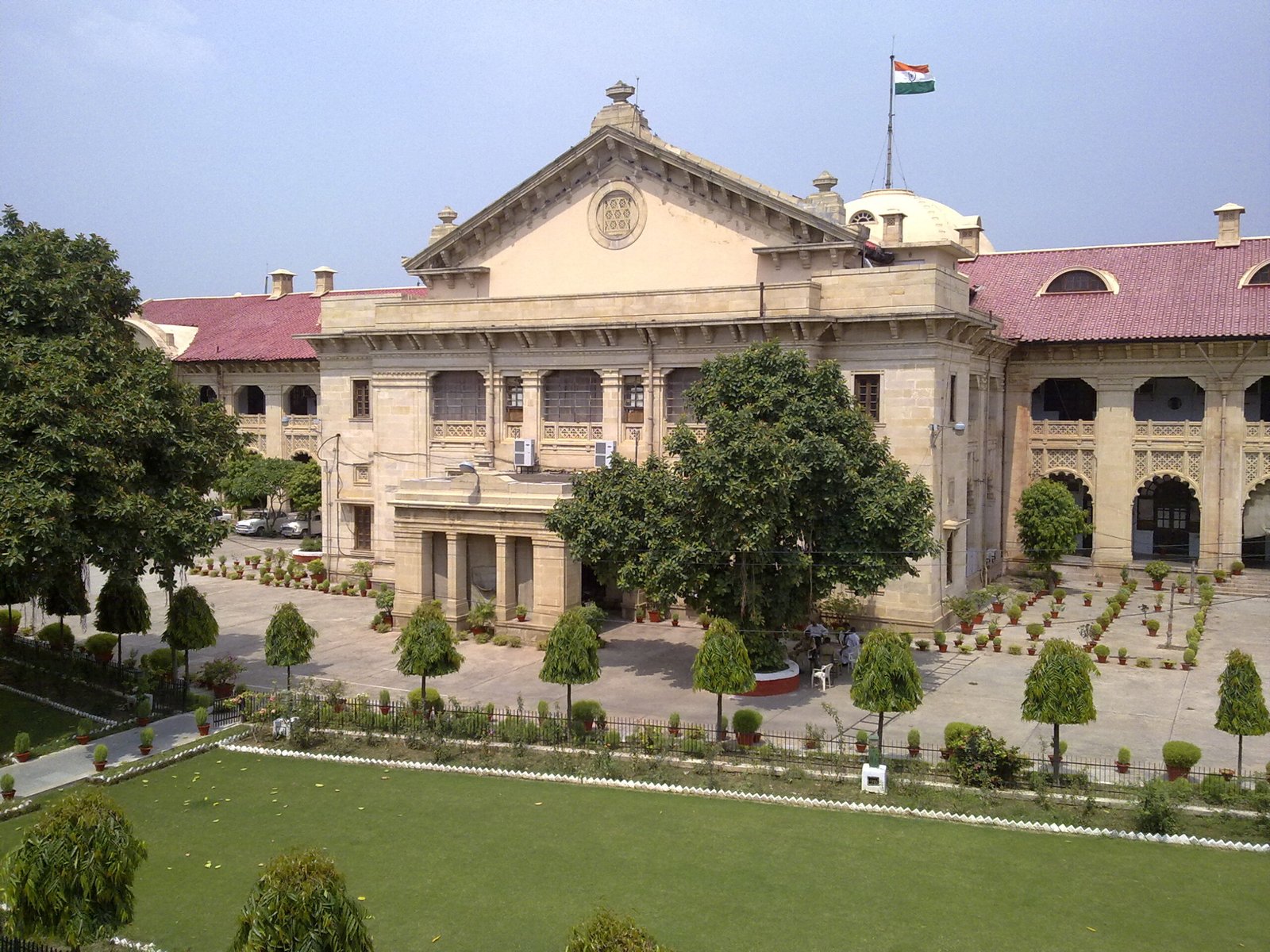
This judgment by the Allahabad High Court addresses twin writ petitions challenging arbitrary, ex-parte administrative orders passed by revenue authorities that attempted to nullify a decades-old appellate title decree and convert private agricultural/abadi land into a public pond. The petitioner, Sunbeam School, constructed an educational institution on plots situated in Village Lahartara, Varanasi, following a regularized lease from the recorded bhumidhar (Smt. Dhiraji Devi) and valid map sanctions from the Varanasi Development Authority. Decades after title attained finality through a 1988 appellate decree and a 1996 Board of Revenue order, local authorities—prompted by a third-party complaint—ex-parte recalled administrative execution entries, cancelled an earlier Section 143 Abadi declaration, and ordered the land to be re-recorded as a pond. The High Court held these administrative measures to be wholly without jurisdiction, violative of the principles of natural justice, and an impermissible attempt to overturn judicial decrees on the executive side. Consequently, the Court quashed the impugned orders and restrained the respondents from interfering with the school’s peaceful operation.

  • Background and Title Finality:
    • A title suit (Suit No. 417 of 1979) under Section 229-B of the U.P.Z.A. & L.R. Act was decreed in favor of Smt. Dhiraji Devi by the Additional Commissioner on April 23, 1988, holding her to be the absolute owner in possession.
    • A subsequent Second Appeal before the Board of Revenue was dismissed on August 8, 1996, making the title decree final.
  • Establishment of the Educational Institution:
    • Nagar Nigam, Varanasi, issued a ‘No Objection Certificate’ in January 2002 confirming the land did not belong to Nagar Nigam/Nazul.
    • The land was officially declared as Abadi under Section 143 of the U.P.Z.A. & L.R. Act on July 10, 2002.
    • Dhiraji Devi executed a registered lease deed in favor of the petitioner school, and the Varanasi Development Authority duly sanctioned the building maps and construction permissions in August 2002.
  • Illegal Executive Interference:
    • Prompted by a third-party complaint filed in late 2012, the Additional City Magistrate-III passed an ex-parte order on December 15, 2012, recalling the decades-old execution entry (Parwana Amaldaramad) and effectively sitting in judgment over a superior appellate court decree.
    • Simultaneously, the Sub-Divisional Magistrate (Sadar) passed ex-parte orders on November 21, 2012, and December 20, 2012, recalling the Abadi declaration and ordering the land to be re-recorded as a “Pond” under Sections 33/39 of the U.P. Land Revenue Act without issuing notice to the petitioner or its lessor.
  • Core Legal Findings of the High Court:
    • Incompetence of Executive Review: Judicial and quasi-judicial decrees cannot be set aside or reviewed through administrative orders by executive magistrates.
    • Violation of Natural Justice: Passing adverse orders affecting a running institution and a settled title holder without issuing notice or affording an opportunity of hearing is a severe breach of natural justice and principles of law.
    • Private Land Status: Historical entries (such as Khatauni of 1359 Fasli) established that the land was Sir Malikan (private cultivation under zamindari rights), which vested/settled under Section 18 of the U.P.Z.A. & L.R. Act; it was never public land or a public pond. The Supreme Court and High Court rulings regarding public ponds do not apply to private land and private holdings.
    • Doctrinal Estoppel: Nagar Nigam was legally barred by estoppel from reversing its clear 2002 NOC acknowledging that the land was not municipal property.

J.O. (Web) 2026 ALL 61

Sunbeam School v. State of U.P. and others (D.O.J. 03.07.2026)

J.O. (Web) 2026 ALL 61 click here to view full text of judgment
Next Story

Supreme Court Judgment Summary 15th Sep, 2026

Supreme Court Judgment Summary 15th Sep, 2026

A Definitive Review on Disability Pension Rights for Ex-Servicemen

This landmark batch of appeals brought by the Union of India challenged various orders passed by the Armed Forces Tribunal (AFT) and High Courts, which had granted the disability element of service pensions to ex-servicemen. These former personnel had been assessed by Release Medical Boards (RMB) as having disabilities that were “Neither Attributable Nor Aggravated” (NANA) by military service. The Supreme Court addressed the core tension between the protective, beneficial jurisprudence established in Dharamvir Singh v. Union of India (governed by the Entitlement Rules 1982) and the restrictive framework introduced by the subsequent Entitlement Rules 2008. Crucially, the Court undertook a deep constitutional and administrative review of the legitimacy of the 2008 rules, evaluating whether they possessed binding legal force and whether they could dilute established beneficial entitlements.

2026 INSC 993 : Union of India & Ors. v. Col. NC Isaac (Retd.) and Connected Appeals (D.O.J. 15.09.2026)

Next Story

Setting Aside Ineligible Selection to Protect Merit

The Supreme Court of India dismissed the civil appeal filed by Sunita Lahu Panchpande, upholding the Bombay High Court’s judgment that had set aside her appointment as an Anganwadi Supervisor in Nashik District. The appellant, who originally served as an Anganwadi Sevika in Jalgaon District, applied for and was appointed to the post in Nashik despite an express restriction in the advertisement and the governing Government Resolution (G.R.) dated November 17, 2001, mandating that applicants must possess ten years of work experience specifically within Nashik District. Although the Divisional Commissioner had erroneously issued a clarification stating that experience from other districts was acceptable, the Supreme Court ruled that a subordinate administrative official cannot issue clarifications contrary to statutory G.R.s and recruitment advertisements. Citing the doctrine that appointments made in disregard of advertised qualifications amount to a fraud on the public, the Supreme Court affirmed the High Court’s order directing the appointment of the eligible wait-listed candidate (the sixth respondent) in her place, while acknowledging the compassionate observation permitting the appellant’s accommodation in her home district.

  • Core Issues Addressed: The Supreme Court evaluated whether a candidate lacking the mandatory territorial work experience stipulated in a recruitment advertisement and government resolution can retain public employment based on an erroneous administrative clarification.
  • Mandatory Territorial Eligibility: A conjoint reading of the 2001 Government Resolution and the specific conditions of the advertisement clearly established that applicants must have accumulated their ten years of qualifying experience as an Anganwadi Sevika within the same district (Nashik).
  • Incompetence of Administrative Clarifications: The Divisional Commissioner lacked the legal authority to issue a clarification that ran completely contrary to the explicit text of the 2001 G.R.; any genuine doubt ought to have been referred back to the State Government.
  • Fraud on Public Aspirants: Reaffirming the principle laid down in Tripura Sundari Devi, the Court emphasized that appointing ineligible candidates in violation of advertised terms without an express relaxation clause constitutes a fraud on public candidates who possessed better qualifications but refrained from applying.
  • Final Outcome: The appeal was dismissed, the High Court’s judgment was upheld, the sixth respondent was awarded the rightful appointment with benefits to be disbursed within two months, and the appellant was granted time until September 30, 2026, to transition out of the post.

2026 INSC 1002

Sunita Lahu Panchpande v. The District Collector & Ors. (D.O.J. 16.09.2026)

2026 INSC 1002 click here to view full text of judgment

Next Story

Acquittal Under NDPS Act Due to Flawed Sampling and Unproven Contraband

The Supreme Court of India allowed the criminal appeals filed by the appellants Abdul Rajik and Govind, setting aside the concurrent judgments of the Trial Court and the High Court of Madhya Pradesh which had convicted them under Section 8 read with Section 20 of the Narcotic Drugs and Psychotropic Substances (NDPS) Act, 1985. The appellants had been sentenced to rigorous imprisonment for 10 years and 8 years respectively, following allegations that they were caught carrying charas. The Supreme Court held that the prosecution fundamentally failed to establish an unbroken chain of custody for the seized samples, pointing out severe lapses, including the total non-compliance with Section 52-A of the NDPS Act (drawing samples without a Magistrate), missing entries in the malkhana register regarding the exit of samples, a silent carrier constable, and an unexplained five-day delay before the samples reached the Forensic Science Laboratory (FSL). Consequently, the FSL report became untrustworthy, and with no other reliable scientific proof that the recovered material was actually charas, the Court granted the appellants the benefit of the doubt and acquitted them.

  • Core Issues Addressed: The Supreme Court examined the validity of convictions under the NDPS Act concerning the integrity of link evidence, the absolute necessity of maintaining a secure chain of custody for seized contraband samples, and the legal consequences of failing to comply with Section 52-A of the NDPS Act.
  • Breach in Link Evidence and Custody: The prosecution failed to prove the safe transit of the samples from the malkhana to the FSL. Crucially, the forwarding letter from the Superintendent of Police was dated December 1, 2004, whereas the FSL recorded receipt on December 6, 2004, leaving an unexplained five-day gap with zero evidence as to whose custody the samples remained in during this period.
  • Non-Compliance with Section 52-A: The investigating officer completely omitted the mandatory statutory safeguard of drawing representative samples in the presence of an Executive or Judicial Magistrate, which severely dented the integrity of the seizure and sampling process.
  • Exclusion of the FSL Report: Due to the shattered chain of custody and procedural flaws, the FSL report (Exhibit P-46) lost its evidentiary value and had to be discarded. Furthermore, the informal spot-testing method (burning a small piece of the substance) was deemed unscientific and insufficient to prove the material was charas.
  • Final Outcome: The appeals were allowed, the judgments of conviction and sentences were set aside, and the appellants were acquitted of all charges with their bail bonds discharged.

2026 INSC 1001

Abdul Rajik v. State of M.P. (D.O.J. 16.09.2026)

2026 INSC 1001 click here to view full text of judgment

Next Story

The Finality of Tax Settlements: Barring Reassessment After ITSC Orders

The Supreme Court of India dismissed the civil appeal filed by the Revenue (Income Tax Department), upholding the judgment of the Delhi High Court which had quashed a reassessment notice and order issued against the respondent-assessee, M/s. Omaxe Limited. The core controversy revolved around whether the Assessing Officer (AO) retained the jurisdiction to reopen a concluded assessment under Section 148 of the Income Tax Act, 1961, to disallow housing project deductions under Section 80IB(10) after the Income Tax Settlement Commission (ITSC) had already passed a final settlement order under Section 245D(4). The Supreme Court ruled that Chapter XIX-A of the Income Tax Act is a self-contained code. Once an application for settlement is admitted and a final order is issued, it attains absolute finality under Section 245-I, and the regular assessment machinery cannot be invoked to bypass this conclusiveness. The Court clarified that if the Revenue wishes to challenge a settlement order on grounds of fraud or misrepresentation, its sole exclusive remedy is to approach the ITSC directly under Section 245D(6)—not to initiate parallel reassessment proceedings.

  • Core Issue Addressed: The Supreme Court examined whether an Assessing Officer can independently issue a reassessment notice under Section 148 to disallow deductions (such as under Section 80IB(10)) that were part of the total income considerations during a concluded proceeding before the Settlement Commission.
  • Exclusive Jurisdiction of the ITSC: The Court reaffirmed that upon the admission of a settlement application, the ITSC assumes exclusive jurisdiction over the case for that assessment year, placing the regular assessment machinery under statutory abeyance pursuant to Section 245F(2).
  • Conclusiveness of Settlement Orders: Under Section 245-I, orders passed by the ITSC under Section 245D(4) are final and conclusive on the matters stated therein, barring the Revenue from splitting an assessment to re-litigate items through standard reassessment channels.
  • Exclusive Remedy for Fraud or Misrepresentation: If the Revenue discovers that a settlement order was obtained through misrepresentation or concealment, Section 245D(6) provides the exclusive statutory pathway to declare the settlement void by moving the ITSC directly, a route the Revenue unsuccessfully attempted and exhausted in this very case.
  • Final Outcome: The appeal filed by the Revenue was dismissed, confirming that the regular tax authorities cannot initiate parallel reassessments once an ITSC settlement order has attained finality.

2026 INSC 1000

Assistant Commissioner of Income Tax & Another v. M/s. Omaxe Limited (D.O.J. 16.09.2026)

2026 INSC 1000 click here to view full text of judgment
Hi Judgments Online