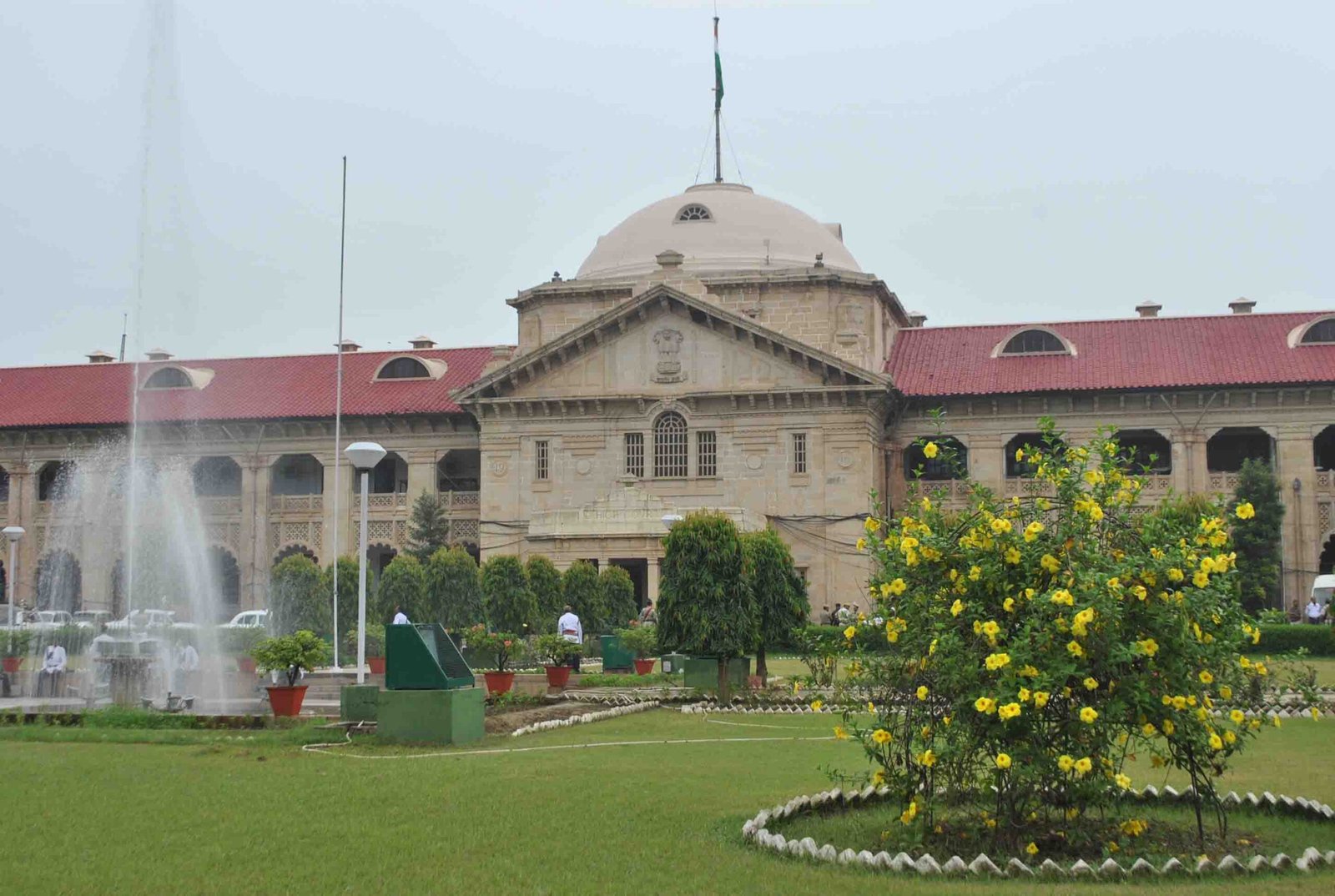
This criminal appeal was filed under Section 14-A(1) of the SC/ST Act by the appellant challenging an order dated 17.04.2026 passed by the Special Judge, SC/ST Act/Additional Sessions Judge, Lakhimpur Kheri, which treated her application under Section 173(4) of the BNSS as a criminal complaint instead of ordering the registration of a First Information Report (FIR). The appellant, a 35-year-old instructor belonging to a Scheduled Caste, alleged that opposite party no. 2 sexually exploited her under the pretext of helping recover money owed to her husband from a land transaction. The Allahabad High Court noted that the allegations—where a married woman purportedly permitted sexual exploitation voluntarily to recover her husband’s money without any force or deceit—were inherently improbable, absurd, and did not disclose any cognizable offence or a case under the SC/ST Act. Holding that the litigation was an abuse of the criminal justice system intended to blackmail opposite parties for monetary recovery, the Court exercised its inherent and constitutional powers under Article 215 of the Constitution and Section 528 of the BNSS to suo motu set aside the trial court’s order and quash the entire complaint proceedings.
- Inherent and Constitutional Powers to Quash Frivolous Proceedings:
- As a superior Court of record under Article 215 of the Constitution, the High Court possesses inherent, unfettered plenary powers to determine its own jurisdiction and secure the ends of justice.
- The Court held that even while hearing an appeal filed by a complainant, it can suo motu exercise its inherent jurisdiction under Section 528 of the BNSS (corresponding to Section 482 Cr.P.C.) to quash criminal proceedings to prevent the abuse of process and stop unwarranted persecution.
- Absurd and Improbable Allegations:
- The appellant’s claim that she permitted sexual exploitation by a private party merely under an allurement to recover her husband’s money—with no allegations of force, coercion, or deceit—was found to be extremely unnatural and one that no person of ordinary prudence could believe.
- Under the parameters laid down in State of Haryana v. Bhajan Lal, allegations that are so absurd and inherently improbable warrant termination at the very threshold to protect innocent parties from vexatious litigation.
- Prohibition on Using Criminal Process for Financial Recovery:
- The Court observed that the criminal machinery was being abused to settle civil or monetary disputes and coerce the opposite parties into paying undisclosed dues.
- Reiterating Supreme Court precedents, the judgment emphasized that criminal proceedings cannot be permitted to be utilized as a tool for the realization of disputed financial claims.
- Absence of Ingredients for an Offence:
- The record revealed that the underlying dispute regarding a property transaction had already culminated in a police final report following an amicable resolution where consideration amounts were refunded.
- Furthermore, despite citing the Scheduled Castes and the Scheduled Tribes (Prevention of Atrocities) Act, the complaint lacked any foundational assertions or material ingredients to attract offences under the special statute.
J.O. (Web) 2026 ALL 25
X Complainant Of Complaint Case No. 65/2026 Versus State Of U.P. Thru. Prin. Secy. Home Civil Sectt. Lko. And 3 Others (D.O.J. July 17, 2026)
J.O. (Web) 2026 ALL 25 click here to view full text of judgment