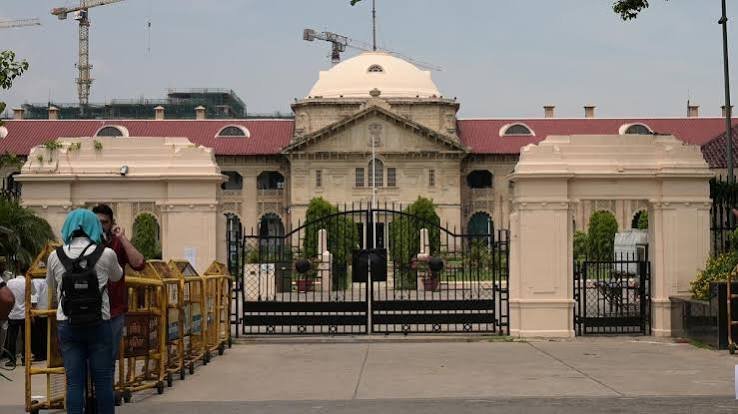
This application under Section 482 of the Cr.P.C. was filed by Baldev Raj Arora, a 77-year-old director of a constituent company involved in a 2011 Airports Authority of India (AAI) project corruption case, seeking the modification/revocation of a stringent condition imposed in his 2013 bail order requiring the deposit of ₹64,00,000 in a fixed deposit. The Allahabad High Court allowed the application, holding that Section 362 of the Cr.P.C. does not bar the modification of interlocutory bail conditions, that onerous financial conditions without establishing guilt are impermissible, and that the constitutional inherent powers of the High Court under Article 215 and Section 482 can be invoked to prevent a failure of justice when a trial has been indefinitely consigned to records.
- Factual Background & Context: The applicant was implicated in a 2011 CBI case regarding alleged forged bills for cement supply to Varanasi Airport. On December 19, 2013, the High Court granted him bail subject to the condition of depositing ₹64,00,000 as a fixed deposit in a nationalized bank in favor of AAI, renewable until the conclusion of the trial. Over time, key prosecution sanction orders against co-accused were quashed by the High Court and upheld by the Supreme Court, leading the trial court to close proceedings and consign the file to the record room. The applicant, now 77 years old, approached the Court to release his fixed deposit since the trial was effectively stalled.
- Maintainability and Section 362 Cr.P.C.:
- The Central Bureau of Investigation (CBI) raised a preliminary objection that modifying a bail condition is barred by Section 362 Cr.P.C. and that the Court became functus officio.
- The Court rejected the CBI’s objection, holding that bail orders are purely interlocutory orders and not final judgments disposing of a case, thereby rendering Section 362 inapplicable to the variation of bail conditions.
- The Court overruled a conflicting coordinate bench ruling (Aparna Purohit v. State of U.P.) as per incuriam for failing to consider statutory definitions and Supreme Court precedents, while endorsing rulings such as Vinod Kumar Sharma v. CBI and Jagdish Arora v. Union of India.
- Onerous Financial Conditions Deprecated: Citing Supreme Court precedents including Sumit Mehta v. State, Dilip Singh v. State of M.P., and Gajanan Dattatray Gore v. State of Maharashtra, the Court reiterated that criminal courts must not act as recovery agents, and imposing onerous financial deposits as a pre-condition for bail without a trial concluding guilt is unreasonable and prohibited.
- Constitutional and Inherent Powers: The Court emphasized that its inherent powers do not stem solely from Section 482 Cr.P.C., but flow broadly from Article 215 of the Constitution as a superior Court of Record, designed to ensure that no technical absence of an enabling provision causes a failure of justice.
Final Directions: The application was allowed, and the condition requiring the deposit of ₹64,00,000 was revoked. The trial court was directed to release the deposited amount along with accrued interest in favor of the applicant within thirty days.
J.O. (Web) 2026 ALL 4
Baldev Raj Arora Versus CBI/ACB Lko. (D.O.J. July 2, 2026)
J.O. (Web) 2026 ALL 4 click here to view full text of judgment