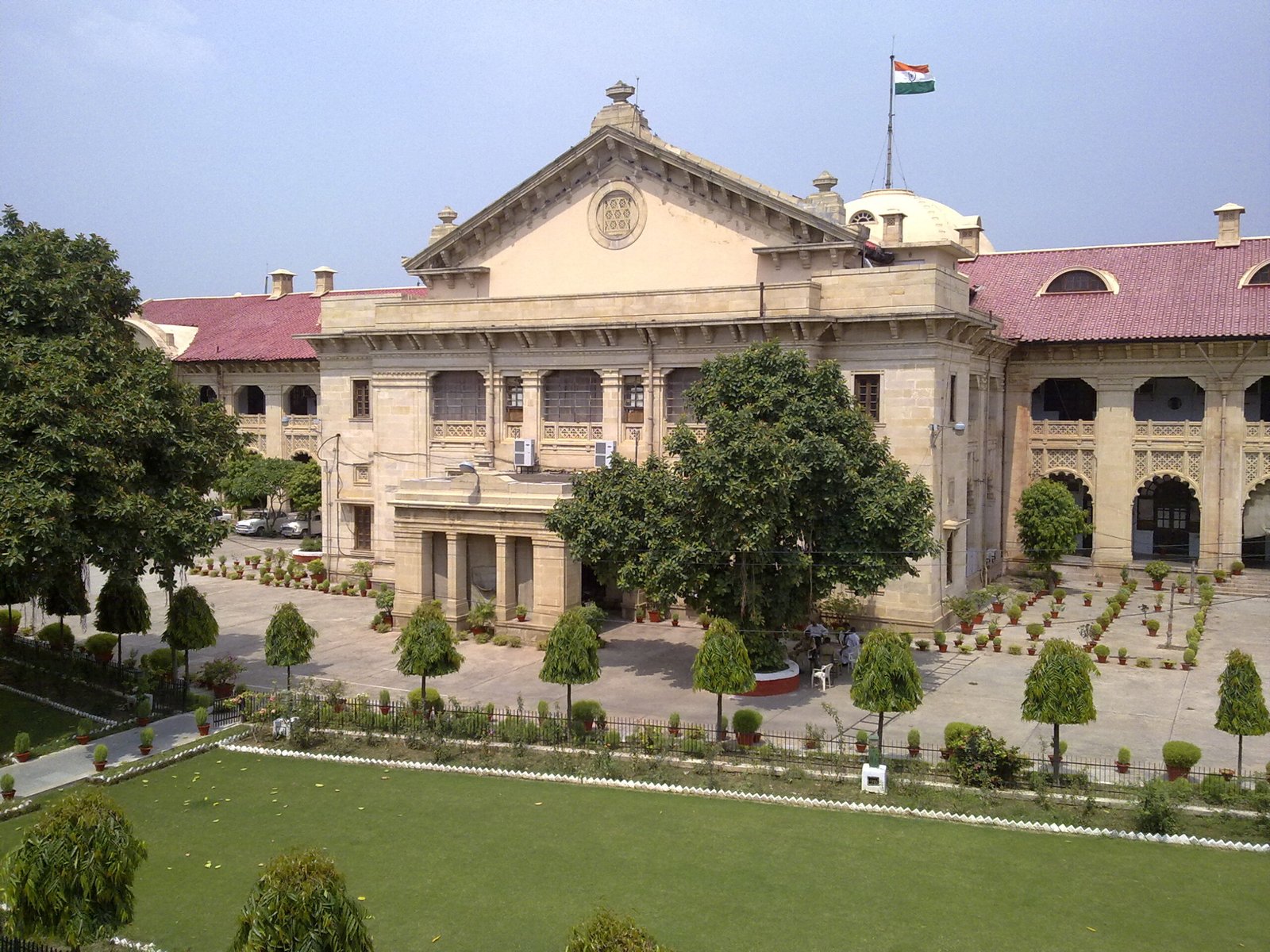
The Lucknow Bench of the Allahabad High Court allowed the criminal appeals filed under Section 374(2) of the Cr.P.C., setting aside the judgment and order of conviction dated February 3, 2011, passed by the Additional District and Sessions Judge/F.T.C.-III, Raebareli. The trial court had previously convicted the appellants under various sections including 147, 148, 302, 376(2)(g), and 323 read with Section 149 of the I.P.C. and Section 3(ii)(v) of the SC/ST Act, sentencing them to life imprisonment. The High Court thoroughly scrutinized the ocular, medical, and documentary evidence and concluded that the prosecution miserably failed to prove the guilt of the appellants beyond a reasonable doubt, particularly due to fatal flaws in the investigation, lack of a valid Test Identification Parade (TIP), severe contradictions among star witnesses, and the improper invocation of the SC/ST Act. Consequently, all appellants were acquitted of all charges, giving them the benefit of the doubt.
- Factual Matrix:
- On the intervening night of May 24/25, 2002, members of a nomadic (Banjara) community who had temporarily set up camp (Dera) in a village were attacked following a severe thunderstorm and rain.
- According to the FIR lodged by complainant Banwari Lal (P.W.2) against 3 to 4 unknown persons, assailants beat up camp residents, dragged away the victim (wife of Sitaram), and shot dead Pokhai when he attempted to rescue her.
- Identification and Investigation Flaws:
- The appellants were not named in the initial FIR. Their subsequent identification was handled irregularly; instead of a formal Test Identification Parade (TIP), photographs were shown to the victim first, followed by an identification inside a police station lock-up where the accused were already detained.
- The High Court held that such identification procedures rendered the dock identification and police-managed identification meaningless and legally inadmissible.
- Evidentiary Inconsistencies:
- Major contradictions surfaced among the testimonies of the star witnesses—the victim (P.W.1), the complainant (P.W.2), and the deceased’s son (P.W.4)—regarding timelines, specific roles, the location of the rape, and whether the victim was married.
- The medical evidence failed to decisively corroborate the specific allegations of gang rape, and material objects like seized cash, medicine, and clothing fibers were neither properly produced nor proved during the trial.
- Misapplication of the SC/ST Act:
- The High Court noted that the ingredients for invoking Section 3(2)(v) of the SC/ST Act were absent because the victims were nomadic travelers unknown to the locals prior to the incident, making it impossible for the accused to have targeted them on the ground of their caste.
- Final Decision:
- Finding the trial court’s judgment perverse, based on surmises, and lacking sound legal appreciation of material evidence, the High Court set aside the conviction order.
- Appellant Rati Pal Patel (currently on bail) was discharged from his bond, while the remaining appellants in jail were ordered to be released forthwith unless wanted in connection with any other case.
J.O. (Web) 2026 ALL 1
Anwar Ali & Others v. State of U.P. (Connected with Criminal Appeal No. 550 of 2011) (D.O.J. July 1, 2026)
J.O. (Web) 2026 ALL 1 click here to view full text of judgment