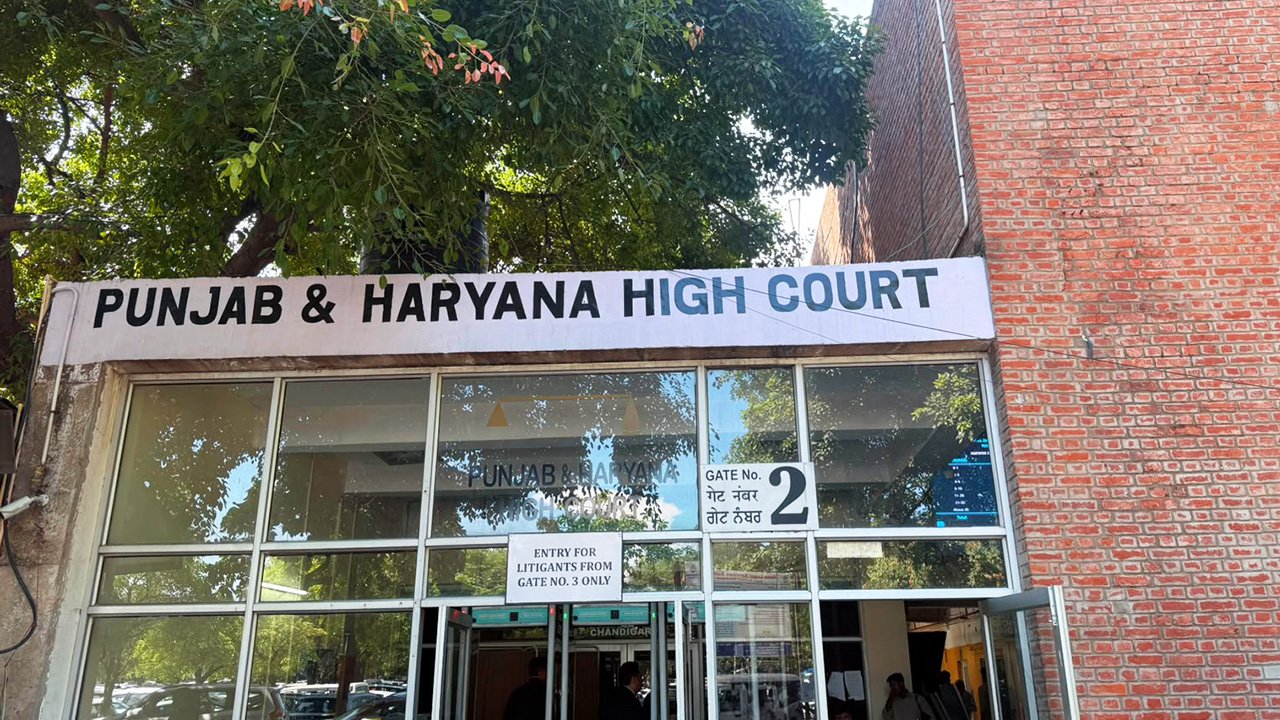
This regular second appeal arose from a judgment and decree dated 27.02.1997 passed by the Additional District Judge, Gurugram, which had set aside the trial court’s judgment decreeing the plaintiff’s suit for declaration and permanent injunction. The dispute centered around land measuring 68 Kanal 13 Marla situated in Village Wazirpur, which the plaintiff had purchased via a registered sale deed in 1978 after verifying revenue records that listed the vendor as the owner. Decades later, the plaintiff learned that the land had been declared surplus by the Collector in 1959, leading to mutation entries in favor of the State in 1985. The Punjab and Haryana High Court held that banjar qadim (uncultivable barren) land cannot legally be included in a landowner’s surplus pool, and that an order suffering from a jurisdictional defect cannot be validated by waiver or acquiescence. Finding that the State failed to update revenue records or take physical possession for decades, the High Court protected the plaintiff as a bona fide purchaser under Section 41 of the Transfer of Property Act, allowing the appeal and restoring the trial court’s decree.
- Factual Background:
- The plaintiff purchased land measuring 191 Kanal 3 Marla, including the 68 Kanal 13 Marla suit land, from one Raghunath Singh through a registered sale deed dated 03.04.1978 for a valuable consideration after making proper inquiries.
- At the time of purchase, the land was banjar (uncultivable) and later reclaimed by the plaintiff via the installation of a tube-well and barbed wire fencing.
- In 1985, the plaintiff discovered that mutation No. 927 had been entered to vest the land in the State based on a collector’s order dated 30.11.1959, which had declared the land surplus.
- The trial court initially decreed the suit in favor of the plaintiff, but the first appellate court reversed the decision, prompting the second appeal.
- Contentions of the Appellant (Plaintiff):
- The suit land was consistently recorded as banjar qadim from 1956-57 onward and at the time of the 1959 surplus order, meaning it could not legally be included while computing a big landowner’s permissible or surplus area under agrarian laws.
- The original surplus order was void ab initio, and a lack of objection by the original landowner cannot validate an inherently illegal order.
- The plaintiff is a protected bona fide purchaser for value without notice under Section 41 of the Transfer of Property Act, 1882, as the State failed to reflect the surplus vesting in revenue records for nearly 26 years.
- Contentions of the Respondents (State):
- The land had been validly declared surplus on 30.11.1959, and since the original landowner Raghunath Singh never raised any objections during those proceedings, neither he nor anyone claiming through him could challenge it later.
- Once declared surplus, the land vested in the State free from encumbrances under Section 12(1) of the Haryana Ceiling on Land Holdings Act, 1972, and had subsequently been allotted to third parties.
- Observations and Analysis by the High Court:
- Exclusion of Barren Land: Citing established precedents such as Munshi Ram v. Financial Commissioner Haryana and Gopal Ram v. State of Haryana, the Court reaffirmed that banjar qadim and gair mumkin lands are liable to be excluded when computing a landowner’s permissible area.
- Jurisdictional Defect: An inherent lack of jurisdiction in a surplus declaration cannot be cured by acquiescence, waiver, or the original landowner’s failure to object.
- Protection of Bona Fide Purchasers: Because the revenue records continuously reflected the vendor as owner in possession until 1976-77, and the State failed to execute mutations or take possession for decades, the plaintiff was entitled to the protections of Section 41 of the Transfer of Property Act, 1882. Official administrative negligence cannot prejudice a citizen relying on public records.
- Unsupported Third-Party Allotments: The State’s defense regarding third-party allotment lacked specific pleadings or documentary evidence, rendering it legally insufficient to defeat the plaintiff’s claim.
- Final Conclusion: The High Court set aside the first appellate court’s judgment and fully restored the trial court’s decree, thereby declaring the plaintiff to be the lawful owner in possession of the suit land and invalidating the 1959 surplus order and subsequent state mutations.
J.O. (Web) 2026 P&H 5
Girwar Singh v. State of Haryana and another (D.O.J. 01.07.2026)
J.O. (Web) 2026 P&H 5 click here to view full text of judgment