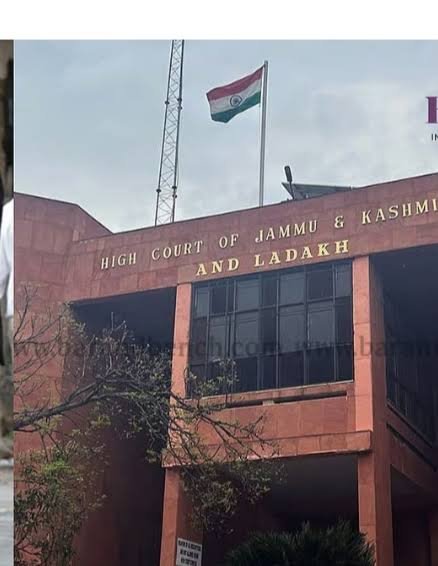
This common judgment delivered by the High Court of Jammu & Kashmir and Ladakh at Jammu addresses the legal fate of corruption investigations and property attachments following the demise of the public servant under scanner. The petitions were filed by the son and family members/associates of the deceased public servant, Rakesh Kumar Pargal, challenging a long-drawn Anti-Corruption Bureau (ACB) FIR and subsequent attachments of commercial and residential properties under the J&K Prevention of Corruption Act, 2006. The High Court ruled that criminal proceedings and ancillary property attachments are fundamentally tied to the prosecution of the living offender; thus, the death of the accused public servant extinguishes the crime under the maxims of criminal law, rendering the investigation and attachments infructuous and mandating the full restoration of properties to their rightful owners.
- Factual Matrix: A preliminary enquiry was initiated in 2015 by the ACB against a government servant, Rakesh Kumar Pargal, regarding disproportionate assets, which eventually led to the registration of FIR No. 01/2020 and the subsequent attachment of properties—including a banquet hall (“Feeling Farms”), residential houses, land plots, and commercial buildings—held by his family members and associates.
- Statutory Framework for Attachment: Under sections 8-B to 8-E of the J&K Prevention of Corruption Act, Svt., 2006, investigating officers can attach properties believed to be acquired through criminal misconduct, subject to confirmation by a Designated Authority and subsequent scrutiny or forfeiture by the Special Judge (Anti-Corruption).
- Abatement Due to Death: During the pendency of the writ petitions challenging these attachments and the FIR, the primary accused, Rakesh Kumar Pargal, demised on November 3, 2022.
- Application of Legal Maxims: The Court invoked foundational criminal jurisprudence maxims, namely “crimina morte extinguuntur” (crimes are extinguished by death), “poena ex delicto defuncti, haeres teneri non debet” (the heirs are not to be penalized for the wrong or crime of the descendant), and “actio personalis moritur cum persona” (a personal right of action dies with the person).
- Final Order: Both writ petitions were allowed. The High Court held that the FIR, the ongoing investigations, and all ancillary attachment orders and confirmations are rendered completely unsustainable and infructuous due to the death of the accused public servant, ordering the immediate restoration and unfreezing of all affected properties to the writ petitioners.
J.O. (Web) 2026 J & K 16
Dheeraj Pargal v. UT of J&K and Anr. (D.O.J. 21.07.2026)
J.O. (Web) 2026 J & K 16 click here to view full text of judgment