
Indian Judgements

Indian Judgements

High Court Affirms Prima Facie Case in Terror Conspiracy Involving Election Threats

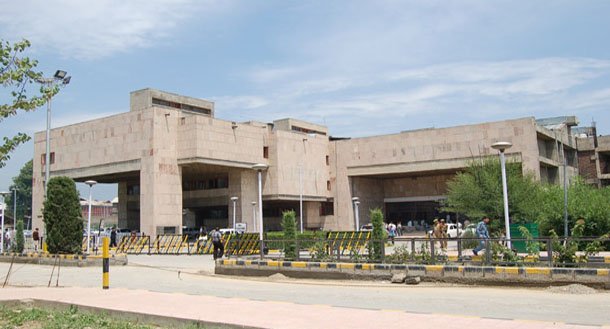
The High Court of Jammu & Kashmir and Ladakh at Srinagar dismissed twin criminal appeals challenging an order passed by the Special Court under the NIA Act, Srinagar, which had framed charges against the appellants under Sections 13, 18, 39, and 40(2) of the Unlawful Activities (Prevention) Act, 1967 (UAPA) and Section 506 of the IPC. The appellants were intercepted carrying threat posters targeting upcoming parliamentary elections and ₹1,00,000 in unaccounted cash intended for a banned outfit (The Resistance Front – TRF). Justice Rajnesh Oswal, speaking for the bench, held that at the stage of framing charges, the court is only required to evaluate whether a prima facie case or grave suspicion exists based on the prosecution’s material, rather than conducting a mini-trial or examining the defense’s version. The bench found robust digital, technical, and physical evidence—including FSL extractions of exclusive photos and location metadata—corroborating the conspiracy with a Pakistan-based handler and supporting the legality of the charges. Consequently, the appeals were dismissed.

  • Factual & Procedural Background:
    • Following online threats posted by the terrorist organization TRF on a social media group (“Fight Kashmir”) against Booth Level Officials for upcoming elections, FIR No. 11/2024 was registered at Police Station Shaheed Gunj.
    • On March 19, 2024, during a routine checkpoint check at Jehangir Chowk, the appellants (Adnan Bashir Bangroo and Mohd. Manan Dar) were intercepted on a motorcycle.
    • Police recoveries included 39 propaganda posters matching online Telegram posts, a bottle of glue, and ₹1,00,000 in cash from the possession of the appellants.
    • The trial court framed charges under Sections 13, 18, 39, 40(2) of the UAPA and Section 506 IPC, leading to the present appeals.
  • Core Legal Arguments of the Appellants:
    • The appellants argued that elements of Sections 18 and 39 of the UAPA were not made out and that the trial court erroneously relied on alleged confessions before an Executive Magistrate without corroborative recovery.
    • Appellant Mohd. Manan Dar raised a plea of false implication, citing a Habeas Corpus petition (HCP No. 70/2024) allegedly filed to challenge his earlier illegal detention by the Special Operations Group.
  • Judicial Scrutiny and Findings:
    • Scope at Charge-Framing Stage: Citing Supreme Court precedents such as Sajjan Kumar v. CBI and State of Andhra Pradesh v. Golconda Linga Swamy, the Court reiterated that courts can frame charges on “grave suspicion” and must sift evidence only to see if foundational ingredients are met, without conducting a mini-trial or weighing probative value like a trial.
    • Defense Material Exclusion: Relying on State of Orissa v. Debendra Nath Padhi, the Court held that an accused cannot produce extraneous defense material (such as habeas corpus pleadings) at the charge stage to alter the prosecution’s record.
    • Substantive Evidence of Conspiracy: Technical and forensic analysis revealed that the appellants’ mobile phones contained a photograph of a neutralized terrorist (Momin Gulzar) not available in public domains, extensive WhatsApp communication between them, location matches via GPRS data placing them with a Pakistan-based handler in Qamarwari, and connections to the Telegram channel “Kashmir Fights”.
  • Final Ruling:
    • The High Court affirmed that sufficient material existed to establish a prima facie nexus with the proscribed TRF outfit and a conspiracy to strike terror and disrupt the democratic process.
    • The appeals were dismissed, with a clarification that observations made by the appellate court are tentative and will not prejudice the final outcome of the trial.

J.O. (Web) 2026 J & K 7

Adan Bashir Bangroo & Anr. v. Union Territory of J&K (D.O.J. 03.07.2026)

J.O. (Web) 2026 J & K 7 click here to view full text of judgment
Next Story

Transfer of Property: Supreme Court Clarifies Impleadment of Pendente Lite Purchasers and Res Judicata

This civil appeal challenged an interim order passed by the High Court of Punjab and Haryana, which had allowed applications for condoning a long delay, restoring a regular second appeal, and impleading subsequent purchasers (Respondent Nos. 3 and 4) as parties in both the main second appeal and cross-objections. The Supreme Court partly allowed the appeal, ruling that since an earlier application for impleadment under Order I Rule 10 of the CPC filed by the subsequent purchasers had been dismissed on merits and attained finality, the principle of res judicata barred a second attempt for the same relief in the main appeal—even if the initial order was based on a factual misconception. However, because the prior application was restricted to the main appeal and did not cover the cross-objections where the purchased property was directly involved, and keeping in view the risk of collusion and abandonment of interest by the transferors, the Supreme Court upheld the impleadment of the subsequent purchasers in the cross-objections while setting aside the restoration of the main appeal.

  • Factual Background:
    • The litigation originated from a property dispute among the legal heirs of Girdhari Lal, involving original plaintiff Bhagwan Dai and defendant Shakuntala Devi (widows of Girdhari Lal), and the appellant Sanjiv Kumar (claimed as adopted son).
    • The First Appellate Court partly ruled in favor of the appellant, declaring him the adopted son and recognizing ownership over a specific portion of property (Property No. 4677).
    • During the second appeal filed by the prior owners, Respondent Nos. 3 and 4 purchased a part of the property (Property No. 4677/A) via a registered sale deed dated June 28, 1990.
  • Prior Procedural History:
    • The subsequent purchasers previously filed an impleadment application under Order I Rule 10 of the CPC, which the High Court dismissed on May 19, 2000, under the misconception that the purchase violated an injunction. That order attained finality.
    • Later, both the main appeal and cross-objections were dismissed for non-prosecution, but only the appellant’s cross-objections were subsequently restored.
    • The subsequent purchasers filed fresh applications for condonation of delay, restoration of the main appeal, and impleadment under Order XXII Rule 10 of the CPC, which the High Court allowed via the impugned order.
  • Supreme Court’s Legal Reasoning & Findings:
    • Application of Res Judicata: The Court reiterated that an erroneous judicial decision, unless corrected through proper appeal or review, remains binding and operates as res judicata at subsequent stages of the same proceedings.
    • Bar in the Main Appeal: Because an identical impleadment prayer under Order I Rule 10 of the CPC was previously adjudicated and rejected on merits, a subsequent application for the same relief regarding the main appeal is barred by res judicata, notwithstanding any factual errors in the earlier order. Consequently, the main appeal could not be restored at the behest of these purchasers.
    • Permissibility in Cross-Objections: The earlier rejection did not bar impleadment in the cross-objections under Order XXII Rule 10 of the CPC, as the previous application did not concern the cross-objections.
    • Protection Against Collusion: Citing precedents like Thomson Press and Amit Kumar Shaw, the Court noted that a pendente lite transferee is vitally interested in protecting their property when the transferor loses interest or potentially colludes with the opposing party.
  • Relief Granted:
    • The Supreme Court partly set aside the High Court’s order, reversing the restoration of the main appeal and the impleadment of the subsequent purchasers therein.
    • The High Court’s order allowing the impleadment of Respondent Nos. 3 and 4 as respondents in the cross-objections was sustained.

2026 INSC 747

Sanjiv Kumar v. Shakuntla Devi and Others (D.O.J. 27.07.2026)

2026 INSC 747 click here to view full text of judgment
Next Story

Protection Under Insolvency Moratorium Does Not Extend to Non-Corporate Debtor in Consumer Complaints

The present civil appeals arose from an order passed by the National Consumer Disputes Redressal Commission (NCDRC), which had rejected applications filed by homebuyer appellants seeking the continuation of a consumer complaint against Respondent Nos. 2 to 7, and adjourned the matter sine die. The NCDRC took this action because a moratorium under Section 14 of the Insolvency and Bankruptcy Code, 2016 (IBC) had been initiated against the primary developer (Respondent No. 1). The Supreme Court of India partly allowed the appeals, holding that the statutory protection of a moratorium under Section 14 of the IBC applies exclusively to the corporate debtor and cannot be stretched to shield other parties such as associated companies, promoters, directors, or landowners unless specifically provided by law. Consequently, the Supreme Court set aside the NCDRC’s order and directed it to proceed with the consumer complaint against Respondent Nos. 2 to 7 while keeping the proceedings against the corporate debtor (Respondent No. 1) under suspension as mandated by the moratorium.

  • Factual Background:
    • Appellants (homebuyers) booked residential apartments in a project named ‘Mantri Manyata Energia’ developed by Respondent No. 1, with construction agreements and agreements for sale executed in 2016, and possession scheduled by December 31, 2018.
    • Due to failure to deliver possession, the appellants and other homebuyers instituted Consumer Case No. 13 of 2023 before the NCDRC alleging deficiency in service and unfair trade practices against Respondent Nos. 1 to 7 (comprising the developer, associated company, promoters/directors, and landowners).
    • During the pendency of the complaint, the NCLT admitted an application under Section 9 of the IBC against Respondent No. 1, triggering a moratorium under Section 14 of the IBC.
  • NCDRC’s Stance:
    • The NCDRC dismissed the applications filed by the appellants to continue the complaint against Respondent Nos. 2 to 7, ruling that the liability of deficiency pertained to Respondent No. 1 and that the proceedings could not be split up, thereby adjourning the complaint sine die.
  • Supreme Court’s Observations & Legal Reasoning:
    • Scope of Moratorium: The protective sweep of a moratorium under Section 14 of the IBC is strictly statutory, operates solely against the corporate debtor, and cannot be expanded by courts or adjudicating authorities to protect subsidiary companies, managers, directors, or personal guarantors.
    • Precedents Relied Upon: Referring to prior judgments including Mohanraj v. Shah Brothers Ispat Pvt. Ltd., Ansal Crown Heights Flat Buyers Association v. Ansal Crown Infrabuild Pvt. Ltd., and Saranga Anilkumar Aggarwal, the Court reaffirmed that an insolvency moratorium does not stultify statutory consumer remedies against other liable natural or legal persons.
    • Premature Adjudication: The NCDRC erred by foreclosing the inquiry at an interlocutory stage and concluding that the deficiency was solely attributable to Respondent No. 1 before actually adjudicating the rival contentions and liabilities of the remaining respondents.
  • Relief Granted:
    • The Supreme Court set aside the NCDRC’s order rejecting I.A. No. 15656 of 2024 and I.A. No. 14200 of 2024.
    • The NCDRC was directed to resume and proceed with Consumer Complaint No. 13 of 2023 against Respondent Nos. 2 to 7 in accordance with law.
    • Proceedings against Respondent No. 1 remain strictly governed and halted by the Section 14 IBC moratorium.

2026 INSC 746

Tejas J. Shah & Amisha T. Shah & Ors. v. Mantri Technology Constellations Pvt. Ltd. (Now known as Buoyant Technology Constellations Pvt. Ltd.) & Ors. (D.O.J. 27.07.2026)

2026 INSC 746 click here to view full text of judgment

Next Story

Environment Law: Safeguarding the National Chambal Gharial Sanctuary from Illegal Sand Mining

This judgment addresses the persistent ecological degradation of the National Chambal Gharial Sanctuary caused by organized illegal sand mining, destruction of wildlife habitats, and enforcement deficiencies across the States of Rajasthan, Madhya Pradesh, and Uttar Pradesh. Reviewing compliance affidavits, status reports, and the Third Report of the Central Empowered Committee (CEC), the Supreme Court expressed dissatisfaction with the overall progress in curbing illegal mining networks. Consequently, the Court issued a comprehensive set of binding directions—including mandatory notifications under Section 218(3) of the Bharatiya Nagarik Suraksha Sanhita, 2023 (BNSS) to protect frontline forest personnel, joint revenue-forest inspections, integration of APARs for accountability, financial investigations via the Enforcement Directorate, and the establishment of a public online monitoring dashboard—while deferring the consideration of a uniform national framework to a later date.

  • Background and Compliance Review:
    • The Court reviewed the status reports and compliance affidavits submitted by the States of Rajasthan, Madhya Pradesh, Uttar Pradesh, the NHAI, the MoEF&CC, and the Third Report dated July 20, 2026, submitted by the Central Empowered Committee (CEC).
    • The Ministry of Environment, Forest and Climate Change (MoEF&CC) undertook that no de-notification of sanctuary areas would occur without prior permission of the Supreme Court, and no new projects (except essential drinking water projects) threatening environmental flow would be considered.
  • Surveillance and Enforcement Gaps:
    • While states like Madhya Pradesh and Rajasthan have made satisfactory progress in establishing CCTV networks, checkposts, and vehicle tracking, the State of Uttar Pradesh has lagged significantly behind in infrastructure and budgetary allocations.
    • The Court expressed serious concern that none of the States had seriously considered invoking preventive detention laws against kingpins and habitual offenders of organized illegal sand mining.
  • Key Directions Issued by the Court:
    • Protection of Forest Personnel: The States of Madhya Pradesh, Rajasthan, and Uttar Pradesh must issue formal notifications under Section 218(3) of the BNSS before the next date of hearing to shield frontline forest officers acting bona fide from unwarranted criminal/departmental harassment.
    • Administrative Accountability: District Magistrates, Tehsildars, and Naib Tehsildars must conduct joint fortnightly inspections with forest officers. Furthermore, the Annual Performance Appraisal Reports (APARs) of DMs, SPs, Divisional Forest Officers, Mining Officers, and Revenue Officers are to be modified to factor in their performance in preventing illegal mining.
    • Dismantling Financial Networks & Prosecution: Where large-scale syndicates operate, references must be made to the Enforcement Directorate, Income Tax Department, and Financial Intelligence Unit to dismantle the money trail. Special Public Prosecutors are to be designated, and chargesheets should ordinarily be filed within sixty days.
    • Transparency and Public Dashboard: States are directed to maintain a publicly accessible online dashboard displaying detected cases, vehicle seizures, FIRs, convictions, and disciplinary actions against delinquent officials.
  • Next Listing: The matter is listed for further consideration on August 11, 2026.

2026 INSC 745

In Re: Protection of National Chambal Gharial Sanctuary (Suo Motu) [Derived from context regarding National Chambal Gharial Sanctuary proceedings] (22.07.2026)

2026 INSC 745 click here to view full text of judgment
Next Story

Striking the Balance: Safeguarding Custodial Rights vs. Ensuring Effective Police Investigation

This appeal by special leave was filed by the State of Andhra Pradesh against the High Court’s judgment, which had partially modified a Magistrate’s order imposing restrictive conditions on the police custody of a police inspector accused of a custodial death. The Supreme Court examined whether the stringent conditions—such as confining interrogation strictly to prison premises, continuous transit videography, and rigid advocate access—unduly hampered the Special Investigation Team’s (SIT) statutory duty to investigate. The Court held that while constitutional safeguards and transparency measures are paramount, imposing unworkable physical restrictions and foreclosing statutory windows for remand under the Bharatiya Nagarik Suraksha Sanhita, 2023 (BNSS) frustrate the objectives of a fair and effective criminal investigation. Consequently, the appeal was allowed with modifications to the custody conditions.

  • Background of the Case: The respondent (an Inspector of Police) was implicated in a custodial death case under various provisions of the Bharatiya Nyaya Sanhita, 2023 (BNS), following allegations of illegal detention, torture, and the disappearance of the victim’s body. The SIT arrested him and sought police custody to recover evidence and trace the missing body.
  • Magistrate and High Court Orders: The Magistrate granted 8 days of police custody subject to 15 strict conditions (including confining interrogation exclusively to the Central Prison and ensuring continuous transit videography). The High Court largely affirmed these conditions while modifying the custody timeline.
  • Statutory Interpretation of BNSS Provisions:
    • The Supreme Court noted that Section 187 of the BNSS enlarges the window for police custody (up to 15 days in aggregate) to be granted in parts during the initial remand period, allowing flexibility for fresh discoveries. Thus, an absolute and non-extendable outer limit imposed by lower courts runs counter to the statutory scheme.
    • Interpreting Section 38 of the BNSS, the Court clarified that an arrested person has the right to meet an advocate of choice during interrogation, but this does not translate to an entitlement for the continuous, ongoing physical presence of an advocate throughout every second of the interrogation session.
  • Practical Modifications on Custody Conditions:
    • Location: The condition confining interrogation exclusively to the Central Prison was set aside as unworkable; the SIT was granted liberty to use its designated interrogation centre or equivalent secure facilities in Vijayawada.
    • Videography: Mandatory CCTV/audio-visual coverage was retained for actual interrogation sessions and recoveries, but continuous uninterrupted videography during transit (travel over 160 kilometers) was dropped as impractical.
    • Safety and Responsibility: The total police remand period was capped at a maximum of 15 days, and joint and several responsibility was placed on the Investigating Officer, Additional SP, SIT members, and Jail Superintendent to guarantee the accused’s safety and well-being.

2026 INSC 744

The State of Andhra Pradesh v. Suda Suresh Veera Venkata Naga Raju (D.O.J. 27.07.2026)

2026 INSC 744 click here to view full text of judgment

Hi Judgments Online