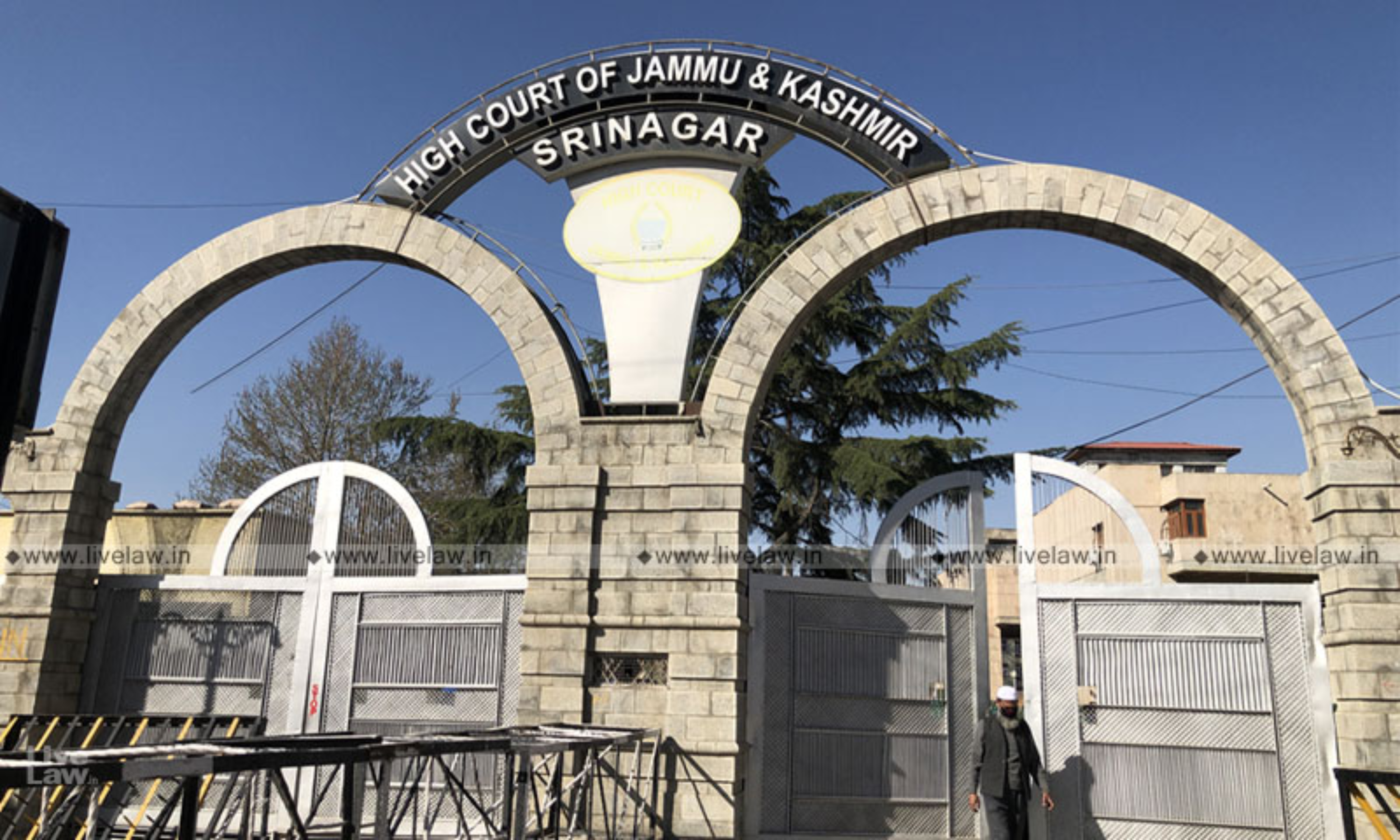
The High Court of Jammu & Kashmir and Ladakh at Jammu allowed a petition filed under Section 528 of the Bharatiya Nagarik Suraksha Sanhita (BNSS), 2023, challenging an order passed by the Magistrate on a protest petition. Following a dispute over land boundaries, FIR No. 133/2023 was registered at Police Station Poonch under Sections 452, 323, 427, 506, and 34 of the IPC. After an in-depth investigation, the police submitted a Final Closure Report stating that no case was made out. However, the Magistrate accepted the complainant’s protest petition—which alleged that the Investigating Officer (I.O.) tampered with witness statements under the influence of a senior police official relative—and returned the case for further investigation in a cryptic manner without discussing the evidence. Justice M.A. Chowdhary held that recording reasons is the “soul of orders” and an essential component of the dispensation of justice, ruling that the trial court’s unreasoned, mechanical order was unsustainable in law. Consequently, the impugned order was set aside and the matter was remanded back to the Magistrate to pass a fresh, reasoned order after hearing the parties.
- Factual & Procedural Background:
- A dispute arose between neighbors over partitioned land boundaries, leading to a complaint by Rimpal Kumar Sharma (Respondent No. 2) alleging house trespass, assault, and property damage.
- Pursuant to a direction under Section 156(3) CrPC by the Chief Judicial Magistrate, Poonch, FIR No. 133/2023 was registered.
- Upon concluding the investigation, the police filed a Final Closure Report, concluding that no offenses were substantiated based on statements collected from the complainant and his family members.
- The complainant filed a protest petition alleging that the I.O. colluded with a senior police officer relative to alter witness statements. The Magistrate accepted the protest petition and ordered further investigation without giving reasons.
- Legal Deficiencies in the Magistrate’s Order:
- The High Court observed that the Magistrate passed the impugned order in a completely cryptic manner without discussing any evidence collected during the police investigation.
- The Magistrate failed to point out any specific legal or factual infirmities in the police investigation or explain why the closure report was legally untenable.
- If the Magistrate suspected that the I.O. had tampered with statements, it was incumbent upon the court to summon those witnesses and confront them with their recorded statements before drawing conclusions, rather than blindly accepting bald assertions.
- The Mandate of Reasoned Judicial Orders:
- Relying on the landmark Supreme Court precedent in Assistant Commissioner v. M/s Shukla and Brothers ((2010) 4 SCC 785), the Court underscored that recording reasons is the “soul of orders” and an indispensable facet of fair justice delivery.
- A litigant is legally entitled to know why their prayer was granted or rejected to enable effective challenge before higher forums.
- Final Directions Issued by the Court:
- The petition was allowed, and the Magistrate’s order rejecting the closure report was set aside.
- The matter was remanded back to the trial court to pass a fresh order in accordance with the law after providing both parties an opportunity to be heard.
J.O. (Web) 2026 J & K 5
Vishnu Kant Sharma and Ors. v. The Union Territory of J&K and Anr. (D.O.J. 03.07.2026)
J.O. (Web) 2026 J & K 5 click here to view full text of judgment