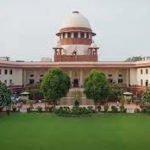
The Supreme Court of India upheld the State’s power to increase royalty and dead rent rates during the subsistence of a mining lease. The Court ruled that mining leases are statutory grants governed by the Mines and Minerals (Development and Regulation) Act, 1957 (MMDR Act) and the relevant rules, meaning the State’s power to revise rates under these statutes is an implied condition of the lease, even if not explicitly stated in the deed. Additionally, the Court held that the decision to enhance these rates was valid, as it was approved by the Chief Minister and did not violate the Rules of Business of the Government of Haryana, 1977.
1. Background and Issues
The dispute involved mining lessees challenging a 2005 notification by the State of Haryana that increased royalty and dead rent rates. The lessees argued that:
- The lease deeds did not contain a provision for rate revision, making the enhancement invalid.
- The enhancement was arbitrary and lacked a rational basis.
- The notification violated the Rules of Business of the Government of Haryana, 1977, due to a lack of concurrence from the Council of Ministers and the Finance Department.
The High Court had previously ruled in favor of the lessees, leading to the State’s appeals.
2. Analysis and Findings
The Supreme Court addressed the issues as follows:
- Statutory Power to Revise Rates: The Court determined that a mining lease is a statutory grant rather than a purely private contract. Consequently, the State cannot contract away its statutory power to regulate mines and minerals in the public interest. The liability to pay royalty and dead rent is governed by the MMDR Act and the 1964 Rules, which allow for periodic revisions, making these revisions an implied condition of the lease.
- Arbitrariness and Material: The Court found the enhancement was not arbitrary. It noted that the revision occurred after more than five years, stayed within reasonable limits, and was based on the State’s assessment of revenue needs and mineral value.
- Rules of Business: Regarding the contention that the Rules of Business were violated, the Court distinguished this case from MRF Limited v. Manohar Parrikar. Because the decision was approved by the Chief Minister (who heads the Council of Ministers), it satisfied the constitutional requirement for collective responsibility. Furthermore, in the absence of evidence that the Finance Minister disagreed with the decision, the Court found there was “deemed consent” from the Finance Department.
3. Final Order
The Supreme Court allowed the State’s appeals, setting aside the High Court’s judgment. The Court directed that the respondents pay the arrears of royalty and dead rent, with interest on such arrears limited to 12% per annum.
2026 INSC 690
State of Haryana & Ors. vs. M/s Faridabad Gurgaon Minerals & Anr. (D.O.J. 13.07.2026)