Indian Judgements

Indian Judgements

Service Law: Termination Valid – Failure to meet mandatory eligibility criteria.

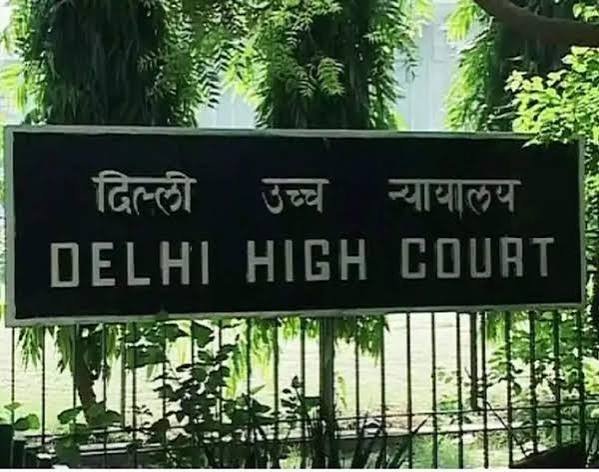
In Ms. Shilpa vs. Solar Energy Corporation of India Ltd. (SECI) &Ors., the Delhi High Court upheld the termination of a petitioner’s services for failing to meet mandatory eligibility criteria. Justice Sanjeev Narula ruled that the petitioner, appointed as a Supervisor (Personnel & Administration), did not possess the required one year of specialized post-qualification experience in that field. The Court found that her previous role as an outsourced Junior Assistant involving general office tasks like typing and filing did not satisfy the specific recruitment requirements. Emphasizing that a conditional appointment remains subject to verification, the Court held that SECI was justified in withdrawing the offer once it was confirmed that the petitioner lacked the necessary credentials.

1. Background and Recruitment Terms

The dispute arose from Recruitment Notification No. 01/2021 issued by SECI for the post of Supervisor (P&A). The advertisement mandated a minimum of one year of post-qualification experience specifically in the field of Personnel & Administration and warned that candidature would be rejected if information was found to be non-conforming to these requirements.

2. Petitioner’s Claim and Provisional Selection

The petitioner applied for the post, claiming experience as a “Junior Assistant” at the National Institute of Immunology (NII), where she allegedly assisted in administrative, establishment, and service matters. She was provisionally selected and joined SECI on February 7, 2022, after a preliminary document verification.

3. Discrepancies Revealed During Verification

Upon seeking formal verification from NII, SECI discovered several inconsistencies:

  • Unauthorized Documentation: A certificate provided by the petitioner describing her as a “Personal Assistant” was disowned by NII, which stated it was not issued by a competent department or authorized officer.
  • Nature of Duties: NII clarified that the petitioner was an outsourced staff whose actual duties were limited to Hindi typing, day-to-day office work, and filing, rather than substantive Personnel & Administration functions.
  • Designation: Her actual designation at NII was “Junior Assistant,” not the “Personal Assistant” role suggested in her submitted certificate.

4. Court’s Analysis of Eligibility

Justice Narula emphasized that in public recruitment, essential qualifications cannot be diluted. The Court observed that merely “assisting” in an office or having a duration of employment is not equivalent to specialized experience in P&A (such as handling recruitment, vigilance, or disciplinary matters). Furthermore, the Court rejected the argument that the petitioner’s tenure at SECI could “cure” her initial deficiency, ruling that eligibility must be assessed as of the cut-off date prescribed in the advertisement.

5. Nature of the Termination

The Court dismissed the petitioner’s argument that her termination was “punitive” or violated the principles of natural justice. The Court held:

  • Conditional Appointment: Since her appointment was expressly subject to verification, she acquired no indefeasible right to remain in service if she failed to meet the threshold criteria.
  • Absence of Stigma: The withdrawal of an appointment due to lack of eligibility is not a punishment for misconduct but a correction of a non-conforming recruitment.
  • Futility of Remand: Because the record clearly showed she lacked the required experience, the Court found that requiring a formal show-cause notice at this stage would serve no useful purpose.

6. Final Conclusion

Finding that the petitioner failed to establish the mandatory experience required for the post, the High Court dismissed the writ petition, confirming that the respondent’s action was legally sound.

2026 DHC 5548

Ms. Shilpa vs. Solar Energy Corporation of India Ltd. (SECI) &Ors(D.O.J. 08.07.2026)
2026 DHC 5548 click here to view full text of judgment

Next Story

Supreme Court Protects Long-Standing Private Title and Company Court Auctions from Executive Overreach

The Supreme Court allowed a set of civil appeals challenging a High Court appellate order that had set aside the confirmation of a public auction involving 65.94 acres of land previously held by M/s Circar Paper Mills Ltd. (a company in liquidation) and purchased by M/s Jeevaka Kandasari Sugar Mills. The State had belatedly claimed that 40.65 acres of this land constituted “assigned lands” which reverted back to the government due to unauthorized transfers under the Andhra Pradesh Assigned Lands (Prohibition of Transfers) Act, 1977. Concurrently, individual appellants (Sundaramma and others) challenged the denial of revenue passbooks for adjacent lands originating from the same chain of title. The Supreme Court held that long-standing private titles, backed by decades of uninterrupted possession, registered deeds, and revenue mutations, cannot be abruptly ousted through summary executive proceedings or state objections raised at the eleventh hour of a court-supervised liquidation auction. Consequently, the Court set aside the appellate orders, revived the Company Judge’s original confirmation of the sale, and restored the related writ petitions for a fresh merits-based adjudication in the High Court.

  • Validity of Company Court Auction: The auction conducted by the Official Liquidator under the specific orders of the Company Court was legal, and the State could not bypass the Company Court by simply issuing a belated telegram or raising summary objections without substantiating title claims.
  • Bar on Summary Eviction for Bona Fide Disputed Title: Relying on the precedent in Government of Andhra Pradesh v. Thummala Krishna Rao, the Court reiterated that when a genuine, long-standing dispute regarding title exists (tracing back decades through registered sale deeds), the State cannot resort to summary eviction or resumption proceedings under statutes like the A.P. Assigned Lands Act.
  • Contradictory State Pleas: The State’s plea of assignment collapsed on its own records, as official pleadings indicated portions of the disputed land had actually been assigned to individuals like B.J. Rao, who held substantial landholdings and did not fit the definition of landless poor persons eligible for assignments.
  • Final Relief and Directions: The Supreme Court set aside the impugned High Court appellate orders, restored the learned Single Judge’s order confirming the auction-sale in favor of J.K. Sugar Mills, revived the writ petitions filed by Sundaramma and others for fresh consideration, and ordered that funds previously deposited by the Official Liquidator to the government be restored for the liquidation proceedings.

2026 INSC 924

M/s Circar Paper Mills Ltd. v. District Collector, Nellore Distt. & Ors. (D.O.J. 25.08.2026)

2026 INSC 924 click here to view full text of judgment

Next Story

Resolving Land Disputes: Supreme Court Clarifies Limits of Article 131 for Statutory Authorities

The Supreme Court addressed an appeal arising from a nearly 2.5-decade-old writ petition initially filed by the Lucknow Development Authority (LDA) against the Union of India and defence establishments regarding interference with a developed colony’s land. The Allahabad High Court had previously dismissed the petition after collaborative efforts failed, erroneously ruling that the dispute lay between the State of Uttar Pradesh and the Union of India, thereby directing parties to seek remedy under Article 131 of the Constitution. The Supreme Court set aside the High Court’s order, emphasizing that the LDA—as a statutory body corporate under the Uttar Pradesh Urban Planning and Development Act, 1973—is an instrumentality of the State under Article 12 rather than a constituent “State” qualified to invoke the Supreme Court’s original jurisdiction under Article 131. Consequently, the matter was remitted back to the High Court for a fresh, expeditious decision.

  • Nature of the Appellant: The Lucknow Development Authority is a statutory body corporate constituted under the Uttar Pradesh Urban Planning and Development Act, 1973, for planned development, and cannot be equated with or treated as the State of Uttar Pradesh.
  • Scope of Article 131: The original jurisdiction under Article 131 of the Constitution is strictly confined to disputes between the Government of India and constituent States listed in the First Schedule, excluding instrumentalities or authorities falling under Article 12.
  • High Court Error: The High Court committed a gross error by mischaracterizing the dispute as one between the State and the Union of India and incorrectly relegating the appellant to file a suit under Article 131.
  • Final Direction: The Supreme Court allowed the civil appeal, set aside the impugned order dated September 19, 2023, and remanded the long-pending writ petition back to the High Court for a prompt decision in accordance with the law.

2026 INSC 923

Lucknow Development Authority v. Union of India & Ors. (D.O.J. 21.08.2026)

2026 INSC 923 click here to view full text of judgment

Next Story

Supreme Court Rules Manufacturing Outlets Constitute Industrial Property for Stamp Duty

This civil appeal addressed whether a multi-story property subject to a gift deed should be classified as “industrial” or “commercial” for computing stamp duty under the Rajasthan Stamp Act, 1998. While the deed was registered on the basis of residential land valuation (which carries a higher stamp duty than industrial land), the Sub-Registrar sought commercial re-valuation because retail sales of manufactured goods (carpets) took place on-site. After concurrent findings by the Collector and the Rajasthan Tax Board favored an industrial classification due to active manufacturing, the High Court reversed it on the ground that retail sales made it a commercial building. The Supreme Court allowed the appeal, holding that the actual active use of the premises for manufacturing—along with statutory registrations under the Factories Act and District Industries Centre—qualifies the land as industrial under state circulars, and the incidental sale of manufactured goods does not strip away its industrial character.

  • Determinant of Land Valuation:
    • The Supreme Court emphasized that as per Circular No. 2/2004 issued by the Government of Rajasthan, actual user determines the valuation of industrial land, rather than strict area classification or master plan zoning.
    • The circular mandates industrial rate valuation if the land is put to industrial use at execution, is situated in a RIICO Industrial Area, or has been converted for industrial purposes.
  • Impact of Retail Sales on Industrial Units:
    • The Court held that the High Court erred in creating a restrictive test requiring exclusive manufacturing without any retail activity.
    • Manufactured items naturally must be sold, and conducting retail sales of those self-manufactured goods on the premises does not convert an active factory/industry into a “commercial” enterprise as distinguished from an industrial purpose.
  • Official Inspections and Statutory Registrations:
    • Significant weight was given to the physical inspection report by the Collector confirming manufacturing activities on-site, as well as the property’s valid registration as a factory under the Factories Act, 1948, and as an industry with the District Industries Centre, Jaipur.
  • Final Relief Granted by the Supreme Court:
    • The Supreme Court set aside and reversed the judgment of the High Court, restoring the concurrent findings and orders of the statutory authorities (Collector and Tax Board).
    • The Court explicitly clarified that because the appellant had voluntarily paid stamp duty calculated at the higher residential rate (which exceeds industrial rates) with open eyes, no claims for a refund would be entertained.

2026 INSC 922

Harinder Singh Sodhi v. State of Rajasthan and Ors. (D.O.J. 24.08.2026)

2026 INSC 922 click here to view full text of judgment

Next Story

Supreme Court Upholds Settlement and Reaffirms Limits of Third-Party Locus Standi in Execution Proceedings

This civil appeal arose from a multi-layered litigation originating from a partition suit filed way back in 1940. The core controversy centered around an execution proceeding initiated in 1979 concerning a property in Solapur, where the original decree-holder entered into a compromise and settlement with third-party purchasers (predecessors of the appellants) who had bought a portion of the land from a co-sharer. While the High Court of Karnataka had interfered with and set aside the executing court’s acceptance of the compromise based on jurisdictional and third-party objections, the Supreme Court allowed the appeal. The Supreme Court held that since the contesting respondents did not claim through the original decree-holder and asserted an independent share, they lacked the locus standi to challenge a compromise that solely concerned the decree-holder’s personal rights and concessions made to the purchasers.

  • Validity of Compromise in Execution:
    • The Supreme Court held that although Section 39(4) of the Code of Civil Procedure, 1908, regulates the transfer of execution cases, a court executing a decree is fully competent to accept a bona fide compromise entered into between a decree-holder and specific judgment debtors or purchasers regarding their respective shares, obviating the need for further transfer.
  • Lack of Locus Standi to Challenge Settlements:
    • The respondents, claiming independent rights or status as legal heirs of other branches, had no right to challenge the compromise reached by the original decree-holder.
    • Because they did not claim through the decree-holder, they possessed no locus standi to question the lawful relinquishment or concession of the decree-holder’s share to the third-party purchasers.
  • Rights of Third-Party Purchasers and Co-Sharers:
    • The purchasers (appellants’ predecessors) who bought land from a co-sharer (Judgment Debtor No. 3A) and subsequently settled with the decree-holder effectively stepped into the shoes of the co-sharer to the extent of the land purchased.
    • Any broader claims of partition or separate allotment by other claimants must be independently agitated before the proper jurisdictional court at Solapur, subject to law.
  • Final Relief Granted by the Supreme Court:
    • The Supreme Court set aside the impugned judgment of the Karnataka High Court and dismissed the respondents’ writ petition.
    • The compromise accepted by the executing court at Belgaum was upheld and affirmed.
    • The Court explicitly clarified that the respondents have no claim whatsoever against the specific property parcel lawfully held in the possession of the appellants (derived from JD Nos. 12 to 15), as the execution proceedings had attained absolute finality as against them.

2026 INSC 921

Pradeep and Ors. v. Jagadishwari and Ors. (D.O.J. 20.08.2026)

2026 INSC 921 click here to view full text of judgment

Hi Judgments Online