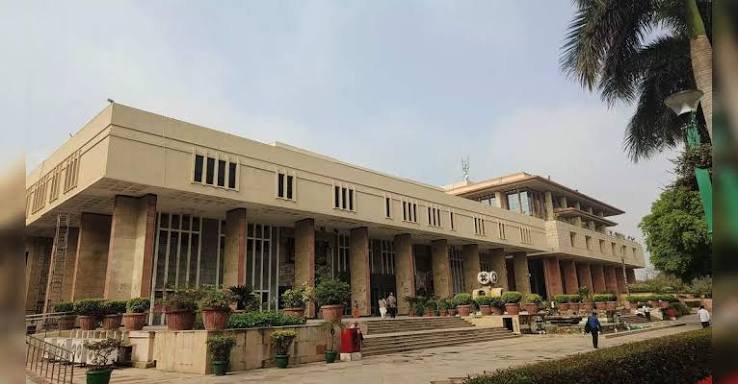
In Mansoor Asghar Peerbhoy vs. State Govt. of NCT of Delhi, a Division Bench of the Delhi High Court denied regular bail to the alleged head of the media cell of the terrorist organization ‘Indian Mujahideen’ in connection with the 2008 Delhi serial bomb blasts. Despite the appellant’s 17-year period of incarceration as an undertrial, Justices Prathiba M. Singh and Madhu Jain ruled that the statutory bar under Section 43D(5) of the UAPA applied because the accusations against him were prima facie true. The Court emphasized that while prolonged detention is a serious concern, it must be balanced against the sovereignty and security of the nation. Given the appellant’s specialized technical role in transmitting the “Message of Death” emails and the fact that the trial is now at its concluding stage, the Court found no justification for his release.
- Factual Background
The case pertains to the coordinated terrorist attacks on September 13, 2008, where serial bomb blasts occurred at multiple locations in Delhi, including Karol Bagh, Greater Kailash-1, and Connaught Place. These incidents resulted in the deaths of 26 individuals and left 135 others injured. Minutes before the explosions, an email titled “MESSAGE OF DEATH” was sent from the address al_arbi_delhi@yahoo.com to various media houses, claiming responsibility on behalf of the ‘Indian Mujahideen’.
- Allegations against the Appellant
The prosecution identified the appellant as a qualified computer engineer formerly employed at Yahoo India, who allegedly headed the media cell of the Indian Mujahideen. He is accused of:
- Hacking Wi-Fi networks in Mumbai (specifically of M/s Kamran Power Controls Pvt. Ltd.) to transmit the claim emails.
- Creating and attaching incriminating PDF documents (such as “EYE FOR AN EYE…”) and video clips to the emails.
- Purchasing laptops used for the conspiracy, as identified by a computer shop owner (PW-231) based on physical appearance.
- Using specialized software (e.g., “Hex ‘00’” and “STELLAR WIPE”) to permanently destroy electronic data and evidence on the recovered hard drives.
- Appellant’s Grounds for Bail
The appellant sought bail primarily on two grounds:
- Prolonged Incarceration: He argued that having spent nearly 17 years in custody without the trial reaching a conclusion, his continued detention violated his right to a speedy trial under Article 21 of the Constitution, citing the Supreme Court’s decision in K.A. Najeeb.
- Parity: He sought parity with a co-accused, Mohd. Hakim, who had been granted bail.
- Court’s Reasoning and Analysis
- Statutory Bar under UAPA: The Court held that under Section 43D(5) of the UAPA, bail must be refused if there are reasonable grounds to believe the accusations are prima facie true. Based on the technical evidence, witness statements, and recovered devices, the Court found the appellant’s role was “concerted, conspiratorial and active”.
- Distinction in Roles: The Court rejected the parity argument, noting that Mohd. Hakim’s role was peripheral (supplying ball bearings), whereas the appellant was a core conspirator at the “centre of this incident”.
- Balancing Rights: While acknowledging the K.A. Najeeb principle that prolonged delay can “melt down” statutory rigors, the Court ruled this is not a mechanical formula. In cases involving national security and mass casualties, the interest of the community and the state must prevail over individual liberty.
- Stage of Trial: The Court noted that the trial is at its “fag end” with 303 witnesses already examined and only two remaining for cross-examination. Releasing the appellant now could have an adverse impact on the final adjudication .
- Final Conclusion
The High Court dismissed the appeal and upheld the denial of bail. It directed the Trial Court to proceed and conclude the trial within eight months, as previously mandated by the Supreme Court.
2026 DHC 5407
Mansoor Asghar Peerbhoy vs. State Govt. of NCT of Delhi(D.O.J. 07.07.2026)