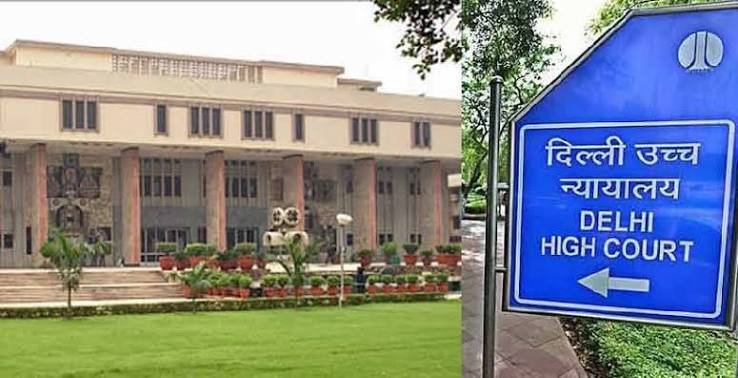
Indian Judgements

Indian Judgements

Appointment of Aarbitrator: Court’s role is limited to a prima facie examination of the existence of an arbitration agreement

In the case of M/S Supply Chain Solutions Pvt. Ltd. vs. M/S Prime Trans Express Pvt. Ltd., the Delhi High Court allowed a petition for the appointment of a Sole Arbitrator to resolve a dispute involving a detained shipment and claims for damages. The respondent opposed the petition, arguing that the dispute had been fully settled through a Settlement Agreement and Minutes of Meeting (MoM), which allegedly novated the original contract and extinguished the arbitration clause. Justice Mini Pushkarna held that under Section 11 of the Arbitration Act, the Court’s role is limited to a prima facie examination of the existence of an arbitration agreement. Questions regarding “accord and satisfaction” or novation are mixed questions of law and fact that must be decided by the Arbitral Tribunal rather than being adjudicated by the Court in a “mini-trial” at the pre-reference stage.

  1. Factual Background

The petitioner, a supply chain management company, entered into a Carriage of Goods Agreement with the respondent in June 2015 for transportation services. A dispute arose in 2016 when a shipment of ceiling fans worth Rs. 38,00,000/- was allegedly illegally detained by the respondent. The petitioner sought compensation of Rs. 12,61,100/- towards damages, illegal payments, and delays.

  1. Procedural History

The parties had previously participated in arbitration resulting in an award in 2017. However, that award was set aside by the Patiala House Courts in 2025 on the grounds that the Sole Arbitrator had been unilaterally appointed by the petitioner, thereby lacking jurisdiction. Following this, the petitioner invoked the arbitration clause again in August 2025, but the respondent failed to reply, leading to the current petition.

  1. The Respondent’s Defense

The respondent contended that the petition was not maintainable because:

  • Full and Final Settlement: The parties had signed an MoM and a Settlement Agreement in September 2016, which supposedly resolved all disputes and barred further legal proceedings.
  • Novation: The respondent argued that these subsequent agreements superseded and novated the original contract under Section 62 of the Contract Act, meaning the arbitration clause no longer survived.
  • Independent Contract: They claimed the MoM was a standalone document without an arbitration clause.
  1. Court’s Analysis and Legal Reasoning

The Court focused on the limited scope of judicial intervention under Section 11(6) of the Arbitration Act:

  • Prima Facie Scrutiny: Relying on Supreme Court precedents like SBI General Insurance Co. Ltd. vs. Krish Spinning, the Court noted that its inquiry is confined to verifying the formal validity and existence of the arbitration agreement.
  • Competence-Kompetenz: The Court emphasized that the Arbitral Tribunal is the appropriate forum to rule on its own jurisdiction, including whether a contract has been discharged by “accord and satisfaction” or novation.
  • Avoiding Mini-Trials: The Court held that resolving whether the MoM actually novated the original agreement requires a detailed consideration of the clauses and surrounding circumstances, an exercise that would usurp the jurisdiction of the Arbitrator if done by the Referral Court.
  1. Final Directions

The Court concluded that since the existence of the arbitration clause in the original agreement was evident, the matter must be referred to arbitration .

  • Appointment:Ms. Alka Chawla, Former Professor-In-charge at Campus Law Centre, University of Delhi, was appointed as the Sole Arbitrator.
  • Open Contentions: The Court clarified that all rights and contentions—including the arbitrability of claims, the plea of novation, and any counter-claims—remain open for adjudication by the Arbitrator.
  • Neutrality: The Court stated that nothing in this order should be construed as an expression of its views on the actual merits of the case.

2026 DHC 5242

M/S Supply Chain Solutions Pvt. Ltd. V. M/S Prime Trans Express Pvt. Ltd (D.O.J. 01.07.2026)

2026 DHC 5242 click here to view full text of judgment

Next Story

Bail Granted in Rape Case: No evidence to prima facie connect the petitioner

In Jaswant Kumar Rao vs. State Govt. of NCT of Delhi, the Delhi High Court granted regular bail to an accused charged under Sections 376D and 506 of the IPC for allegedly filming a rape and circulating the footage. Justice Girish Kathpalia observed that, apart from the statement of the prosecutrix, there was no evidence to prima facie connect the petitioner to the filming of the incident. The Court highlighted several weaknesses in the prosecution’s case, including a significant delay in reporting the incident, the failure of forensic evidence to identify the petitioner’s voice in the video clip, and a lack of interest shown by the investigation agency, which failed to file a status report. Consequently, the Court found no justification for continued detention and ordered the petitioner’s release.

  1. Factual Allegations

The petitioner sought regular bail in FIR No. 338/2024 (PS Geeta Colony) involving allegations of gang-rape and criminal intimidation. The prosecutrix alleged that in October 2023, she was raped by her neighbor, Raj. The specific allegation against the present petitioner, Jaswant Kumar Rao, was that he filmed the act of rape and circulated the video clip. While the alleged rapist (Raj) remained at large, the petitioner was arrested on September 30, 2024.

  1. Arguments for the Petitioner

Counsel for the petitioner argued for bail on the following grounds:

  • Lack of Evidence: There is no legally admissible evidence connecting the petitioner to the filming of the alleged incident.
  • Forensic Results: A forensic examination of the video clip failed to identify the voice in the recording as that of the petitioner.
  • Delay in Reporting: There was an unexplained and inordinate delay in reporting the matter; the incident allegedly occurred in October 2023 but was only reported in July 2024.
  • Refusal of Medical Exam: The prosecutrix refused to undergo a medical examination or submit the clothes she was allegedly wearing at the time of the incident.
  1. Prosecution and Prosecutrix’s Stand
  • State’s Position: The State did not deny that the forensic report failed to link the petitioner to the video. The Investigating Officer (IO) further submitted that the petitioner’s mobile phone could not be recovered as he had allegedly destroyed it.
  • Victim’s Justification: Counsel for the prosecutrix argued that she had supported the prosecution’s case in her chief-examination. The delay in reporting was attributed to societal pressure, and the refusal of a medical exam was justified on the grounds that the incident had occurred nearly a year prior to the report.
  1. Court’s Reasoning and Analysis

The Court noted a “lack of interest” from the investigation agency, evidenced by its failure to file a status report. In its analysis of the evidence, the Court found:

  • Transmission Trail: The prosecution failed to track the transmission of the video to connect the petitioner to the act of filming.
  • Hostile Witness: A key witness (PW5), to whom the petitioner had allegedly transmitted the video, did not support the prosecution’s case during his testimony.
  • Lack of Prima Facie Case: The Court concluded that, besides the prosecutrix’s statement, there was no evidence to establish even a prima facie case that the petitioner filmed the rape.
  1. Final Order

The Court determined there was no reason to further deprive the petitioner of his liberty. The bail application was allowed, and the petitioner was ordered to be released upon:

  • Furnishing a personal bond of ₹10,000/-.
  • Providing one surety in the like amount to the satisfaction of the Trial Court.

The Court directed that a copy of the order be immediately transmitted to the Jail Superintendent to inform the accused.

2026 DHC 5389

Jaswant Kumar Rao vs. State Govt. of NCT of Delhi(D.O.J. 06.07.2026)

2026 DHC 5389 click here to view full text of judgment

Next Story

Limitation: Revision Petition Dismissed as Barred by Limitation

In Rajinder Kumar Gupta vs. Sushila Devi Jain (since deceased) through her LR, the Delhi High Court dismissed a revision petition challenging a 2020 eviction order due to an inexcusable delay in filing. Justice Amit Sharma ruled that the petitioner-tenant could not claim the benefit of Section 14 of the Limitation Act for the time spent pursuing a “wrong remedy” (an appeal against a review dismissal) because that proceeding did not seek the “same relief” as the revision against the original eviction order. The Court held that even after accounting for COVID-19 limitation extensions, the petitioner failed to challenge the eviction order immediately after his review application was dismissed, rendering the present petition time-barred by 180 days.

Summary of Judgment

  1. Factual and Procedural Background

The case originated from an eviction petition filed by the late Sushila Devi Jain regarding a shop in Yusuf Sarai, New Delhi. The landlady sought the premises for the bona fide requirement of her grandson, a CA graduate, to establish his professional office. On July 6, 2020, the Rent Controller passed an eviction order against the petitioner.

  1. Post-Eviction Litigation

Following the eviction order, the petitioner engaged in a series of legal challenges:

  • Review Petition: Filed on July 27, 2020, seeking a review of the eviction judgment based on alleged new evidence. This petition was eventually dismissed on September 25, 2025.
  • Appeal before Tribunal: The petitioner then challenged the dismissal of the review petition via an appeal (RC ARCT 13/2025) before the Rent Control Tribunal. He eventually withdrew this appeal on March 27, 2026, to file the current revision petition.
  • Current Revision: Filed on March 24, 2026, seeking to quash the original 2020 eviction order and the 2025 review dismissal.
  1. Arguments for Condonation of Delay

The petitioner sought to condone the significant delay in filing the revision by arguing:

  • The period from March 2020 to February 2022 should be excluded per Supreme Court orders regarding COVID-19.
  • The time spent pursuing the review and the subsequent appeal should be excluded under Section 14 of the Limitation Act, as he was allegedly prosecuting his remedies in “good faith” based on legal advice.
  • The limitation for a revision under Section 25B(8) of the DRCA should be three years under Article 137 of the Limitation Act.
  1. Court’s Analysis and Findings

The Court rejected the petitioner’s plea for condonation based on the following legal determinations:

  • Commencement of Limitation: Citing Supreme Court precedent (DSR Steel Pvt. Ltd.), the Court noted that when a review petition is dismissed, there is no “merger” of orders; the aggrieved party must challenge the original decree within the stipulated time.
  • Inapplicability of Section 14: The Court held that the appeal filed before the Tribunal was for a “distinct and separate” relief (challenging the review dismissal) compared to the current petition (challenging the eviction order). Therefore, the time spent on that appeal could not be excluded because it was not for the “same relief”.
  • Calculation of Delay: The Court found that even if the period taken to dispose of the review application was excluded, the petitioner failed to challenge the eviction order immediately after the review was dismissed on September 25, 2025. Instead, he waited until March 2026, making the petition time-barred by 180 days.
  1. Final Decision

The Court concluded that the petitioner offered no valid explanation for why the eviction judgment was not challenged immediately after the review dismissal. Consequently, the application for condonation of delay was dismissed, leading to the dismissal of the revision petition regarding the original eviction order. The matter was listed for future hearing only regarding secondary prayers related to execution proceedings.

2026 DHC 5386

Rajinder Kumar Gupta vs. Sushila Devi Jain(D.O.J. 06.07.2026)

2026 DHC 5386 click here to view full text of judgment

Next Story

Eviction Petition Fails: landlord failed to establish a genuine bona fide requirement f

In the case of Brij Mohan Batta vs. Tara Chand Garg & Anr., the Delhi High Court dismissed a revision petition filed by a landlord seeking the eviction of a tenant from a commercial shop in Kirti Nagar. Justice Amit Sharma upheld the decision of the Additional Rent Controller (ARC), ruling that the landlord failed to establish a genuine bona fide requirement for the premises. Although the landlord claimed he needed the shop to settle his two “unemployed” sons in a catering business, the Court found the claim to be concocted, as evidence proved the sons were already gainfully employed running a gift and packaging business at another location.

  1. Nature of the Petition

The petitioner (landlord) filed this revision petition under Section 25B(8) of the Delhi Rent Control Act (DRCA) to set aside an ARC order dated July 8, 2024, which had dismissed his eviction petition against the respondents (tenants). During the pendency of the high court proceedings, the original petitioner passed away and was represented by his legal heirs.

  1. Landlord’s Case for Eviction

The original petitioner sought eviction from Shop No. 3/14-A, Kirti Nagar, which had been let out in 1970. He asserted a bona fide requirement under Section 14(1)(e) of the DRCA, claiming:

  • He was running a catering business from an adjoining shop but was unable to manage it alone due to age.
  • His two sons, Nitin and Ankush Batta, were unemployed and needed the demised premises to run their own business.
  • He had no other suitable alternate accommodation available.
  1. Tenant’s Defense and Evidence

The respondents argued that the landlord’s requirement was forged and fabricated. They provided evidence to show:

  • The sons were already successfully running a business named “Om Vaneesa Creations” (dealing in gift items and theme packaging) from the ground floor of another property in East Punjabi Bagh.
  • They placed photographs on record showing a business banner for “Om Vaneesa Creations” that featured the mobile number of one of the petitioner’s sons.
  • The landlord possessed other vacant shops at the East Punjabi Bagh property that could be used if necessary.
  1. Reasoning of the Lower Court (ARC)

The ARC dismissed the eviction petition after finding that the landlord had not come to the court with clean hands. The ARC noted that the landlord admitted the phone number on the business banner belonged to his son but failed to produce his brother (the alleged owner of that shop) as a witness to rebut the claim that his sons were running that business. The ARC concluded the need for the Kirti Nagar shop was fabricated solely to evict the tenants.

  1. High Court’s Findings and Analysis
  • Limited Scope of Revision: The Court emphasized that its powers under Section 25B(8) of the DRCA are supervisory in nature and not as wide as an appellate court. It can only interfere if the lower court’s order suffers from a jurisdictional error or grave illegality.
  • Failure to Rebut Evidence: The High Court found that once the tenants raised a triable issue regarding the sons’ existing business, the onus shifted to the landlord to displace that presumption. The landlord failed to prove that his sons intended to wind up their current business or that the East Punjabi Bagh premises were unsuitable.
  • Appreciation of Evidence: The Court held that the ARC’s reliance on the photographs and the son’s visiting card—which shared the same contact details—was legally sound.
  1. Final Conclusion

Finding no error apparent on the face of the record or perversity in the ARC’s judgment, the High Court dismissed the revision petition and upheld the refusal to grant an eviction order

2026 DHC 5385

Brij Mohan Batta vs. Tara Chand Garg & Anr.(D.O.J. 06.07.2026)

2026 DHC 5385 click here to view full text of judgment

Next Story

Eviction Upheld as landlord had established a genuine bona fide requirement

In Shalimar Paints Ltd & Anr. vs. M/S Phelps and Company Pvt Ltd, the Delhi High Court upheld an eviction order against a tenant occupying a prime commercial space in Connaught Place. Justice Amit Sharma dismissed the revision petition, ruling that the respondent-landlord had established a genuine bona fide requirement to expand its art business wing, “The Biv”. The Court reaffirmed that a landlord is the best judge of their own requirements and the tenant cannot dictate how the landlord should utilize available space or adjust their business operations. The Court found no merit in the tenant’s claims regarding alternate accommodation or forged documents, concluding that the Rent Controller’s decision to refuse “leave to defend” was legally sound.

  1. Factual Background

The petitioners (tenants) challenged an order dated November 6, 2025, passed by the Rent Controller, which had dismissed their application for leave to defend and passed an eviction order for property No. 9-A, First Floor, Inner Circle, Connaught Place. The respondent (landlord), a private company, sought the premises under Section 14(1)(e) of the Delhi Rent Control (DRC) Act for the expansion of its art business, which involves curating and exhibiting paintings and artifacts.

  1. Landlord’s Bona Fide Requirement

The landlord argued that its current operations on the third floor and terrace were unsuitable due to lack of adequate space for displays and meetings, and because that area was only accessible via the “middle circle,” which has lower commercial visibility and footfall. They intended to remove a common wall between an existing director’s office and the tenanted premises to create a larger gallery and storage area.

  1. Tenant’s Grounds for Defense

The petitioners raised several triable issues in their leave to defend application:

  • Alternate Accommodation: They alleged the landlord concealed approximately 7,500 sq. ft. of available commercial space on the upper floors.
  • Mala Fide Intentions: They claimed the landlord’s actual goal was to evict them and re-let the property at a higher rent.
  • Forged Documents: The tenants alleged that certain challans/invoices submitted by the landlord to prove its art business activities were fabricated, pointing to inconsistencies in serial numbers and dates.
  • Legal Maintainability: They argued that a company cannot seek eviction under Section 14(1)(e) and must instead invoke Section 22 of the DRC Act.
  1. Court’s Findings and Analysis
  • Landlord as the Best Judge: The Court emphasized the settled legal principle that a tenant cannot dictate terms to a landlord regarding the suitability of alternate premises. The landlord’s preference for the first floor due to its strategic entrance from the inner circle was deemed a valid business decision.
  • Suitability of Upper Floors: The Court noted that the third floor was already utilized for co-working operations and suffered from diminished foot traffic and visibility, making it an unsuitable alternative for a high-end art gallery.
  • Genuineness of Challans: Upon perusal, the Court found that the continuity of item numbers across different dates supported the validity of the invoices. It held that minor date inconsistencies did not create a triable issue regarding the landlord’s bona fide intent.
  • Legal Status of Companies: The Court dismissed the challenge regarding Section 22 of the DRC Act, noting that it is well-settled that a body corporate is not barred from invoking Section 14(1)(e).
  • Limited Scope of Revision: Under Section 25B(8), the High Court’s role is not to act as an appellate body but to ensure the Rent Controller’s order is “according to law”. Finding no illegality or jurisdictional error, the Court declined to interfere.
  1. Final Conclusion

The revision petition was dismissed. The Court directed the petitioners to vacate and hand over peaceful possession of the premises forthwith, noting that the statutory six-month grace period under the DRC Act had already lapsed.

2026 DHC 5384

Shalimar Paints Ltd & Anr. vs. M/S Phelps and Company Pvt Ltd,(D.O.J. 06.07.2026)

2026 DHC 5384 click here to view full text of judgment

Hi Judgments Online