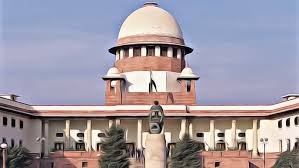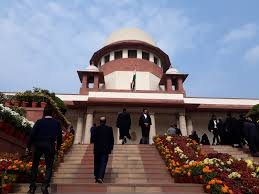
In the matter of Parveen Kumar @ Parveen Chauhan vs. State of Haryana & Ors. (2026 INSC 667), the Supreme Court of India held that the ‘Policy Regarding Release of Life Convicts 2002’ (2002 Policy) is an exercise of the Governor’s constitutional power under Article 161 of the Constitution of India, and therefore, it cannot be superseded or overridden by the statutory ‘Premature Release of Life Convicts 2008’ (2008 Policy) issued under Section 432 of the Code of Criminal Procedure (CrPC). Consequently, the Court set aside the rejection of the appellant’s remission application, ruling that he is entitled to be considered under the more beneficial 2002 Policy.
Background and Legal Issue
- Case Origin: The appellant, convicted for murder and sentenced to life imprisonment, sought premature release based on the 2002 Policy, having served 14 years of actual imprisonment.
- The Dispute: The State of Haryana rejected the representation, contending that the 2008 Policy superseded the 2002 Policy and that the appellant did not meet the stricter eligibility criteria of the 2008 Policy.
- Conflicting Precedents: The Court had to reconcile the application of these policies in light of two conflicting judgments: State of Haryana v. Jagdish, which held that policies under Article 161 cannot be overridden by statutory policies, and State of Haryana v. Raj Kumar, which treated the 2002 Policy as a statutory memorandum and held that it was superseded by the 2008 Policy.
Court’s Analysis
- Constitutional vs. Statutory Power: The Court analyzed the text and history of the Haryana remission policies. It determined that the 2002 Policy, like the 1993 Policy, explicitly required orders to be passed by the Governor under Article 161, making it a constitutional exercise of power, distinct from the 2008 Policy which operates under the statutory framework of the CrPC.
- Rejection of Raj Kumar Reasoning: The Court held that the reasoning in Raj Kumar, which categorized the 2002 Policy as merely a statutory memo, was inconsistent with the larger bench decision in Jagdish. Consequently, the Court found Raj Kumar to be per incuriam regarding this aspect, as it failed to respect the superior constitutional mandate identified in Jagdish.
- Entitlement to Liberal Policy: Reaffirming the principle set in Jagdish, the Court held that if a more liberal policy exists on the date of consideration, the convict is entitled to its benefits.
Final Order
- Appeal Allowed: The Court allowed the appeal and directed the State of Haryana to decide the appellant’s remission application based on the 2002 Policy within four weeks.
- Prospective Application: The Court clarified that this judgment applies prospectively and shall not be used to reopen remission applications that have already been finalized.
- Policy Functionality: The Court noted that the State now effectively has two distinct and separate policies (constitutional and statutory) operating simultaneously, and it is for the State to determine how to proceed with them.
2026 INSC 667
Parveen Kumar@ Parveen Chauhan V. State Of Haryana & Ors. (D.O.J. 01.07.2026)