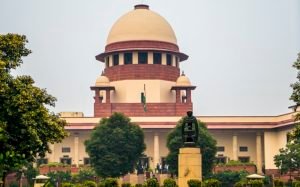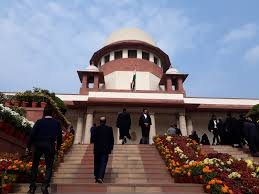
In the matter of Shobha Vasant Bhoir & Ors. vs. Soni @ Vandana Gurumukhdas Jagiasi & Ors. (2026 INSC 664), the Supreme Court of India allowed an appeal and ordered the rejection of a plaint under Order VII Rule 11(d) of the Code of Civil Procedure (CPC), 1908, ruling that the suit was barred by limitation. The Court emphasized that a suit for specific performance based on an unregistered agreement from 1984, filed thirty-eight years later, constitutes an abuse of the judicial process and that courts must proactively “nip in the bud” such fictitious or time-barred litigation to prevent the waste of judicial time.
- The Subject Property: The dispute involves a plot in Ulhasnagar, Maharashtra, which was reserved for public infrastructure (a police station) in 1974, with possession handed over to authorities in 1988.
- The Respondents’ Claim: The respondents claimed rights to the property based on an unregistered agreement to sell dated August 21, 1984.
- Litigation History: After decades of administrative disputes regarding property allocation, the respondents filed a civil suit in 2022 seeking specific performance of the 1984 agreement.
- Lower Court Rulings: The appellants filed applications under Order VII Rule 11 of the CPC, arguing the suit was time-barred under Article 54 of the Limitation Act, 1963. Both the Trial Court and the Bombay High Court rejected these applications, prompting the current appeal.
Legal Analysis
- Scope of Order VII Rule 11: The Supreme Court reiterated that Order VII Rule 11 serves as a “crucial filter” to terminate suits that do not disclose a cause of action or are barred by law. The Court noted that even if a plaintiff uses “clever drafting” to create an illusion of a cause of action, it is the duty of the court to “lift the veil” and reject such claims at the threshold.
- Limitation Period: The Court highlighted that under Article 54 of the Limitation Act, the limitation period for a suit for specific performance is three years. Finding no justification for the thirty-eight-year delay in initiating the suit, the Court rejected the respondents’ argument that a recent High Court observation served as a fresh starting point for the limitation period.
- Judicial Integrity: The Court held that a litigant who remains silent for decades cannot be permitted to file a suit as an “afterthought”.
Final Order
- The Supreme Court allowed the appeal and set aside the High Court’s order affirming the rejection of the appellants’ application.
- The suit filed by the respondents was dismissed as an abuse of the process of the Court.
2026 INSC 664
Shobha Vasant Bhoir & Ors. V. Soni @ Vandana Gurumukhdas Jagiasi & Ors. (D.O.J. 01.07.2026)