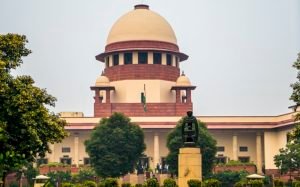
In the matter of Neeraj Gupta vs. Pardeep Kumar Bansal & Ors. (2026 INSC 660), the Supreme Court of India clarified that when an offence is exclusively triable by a Court of Session, a Magistrate is not required to record “pre-charge evidence” under Section 244 of the Code of Criminal Procedure, 1973 (CrPC). The Court held that the High Court erred in remanding the matter to the Magistrate for such evidence, noting that the CrPC has abolished time-consuming committal inquiries to ensure expeditious trials. Consequently, the Supreme Court set aside the High Court’s order and directed it to re-hear the pending revision petitions on their merits.
Background
- Case Origin: Following the death of the appellant’s father after an altercation, the appellant initiated a criminal complaint against the respondents.
- Procedural History: After the Judicial Magistrate initiated the process, the case was committed to the Court of Session. The Sessions Court framed charges against only one respondent, discharging the other two.
- High Court Order: The complainant challenged the discharge, while the charged respondent challenged the summoning and framing of charges. The High Court remanded the matter back to the Magistrate, holding that pre-charge evidence under Section 244 CrPC was essential even for cases exclusively triable by the Sessions Court.
Supreme Court Findings
- Role of the Magistrate: The Court emphasized that under the current CrPC, the role of a Magistrate at the commitment stage is “narrow” and strictly limited to verifying if an offence is exclusively triable by a Court of Session.
- Evolution of Law: Referencing the 41st Law Commission Report, the Court noted that the legislature consciously abolished the lengthy “committal inquiries” present in the 1898 Code to avoid inordinate delays and redundant rehearsals of evidence.
- Applicability of Section 244: The Court clarified that Section 244 CrPC applies to warrant cases instituted otherwise than on a police report that are triable by a Magistrate, not to cases exclusively triable by the Sessions Court.
- Legal Precedent: The Court reaffirmed that the Magistrate is not required to take evidence before committing a case to the Sessions Court, and the evidence is to be examined only at the trial stage after charges are framed.
Final Order
- Appeal Allowed: The Supreme Court set aside the impugned judgment of the High Court.
- Directions to High Court: The High Court is directed to hear the revision petitions filed by both the appellant and the respondent afresh and dispose of them within nine months.
- Compliance: Parties are ordered to appear before the High Court on July 16, 2026.
2026 INSC 660
Neeraj Gupta V. Pardeep Kumar Bansal & Ors.(D.O.J. 01.07.2026)