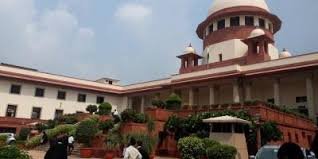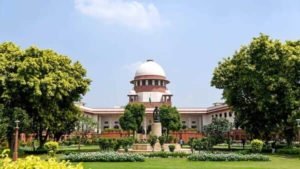
In Satya Narayan Shukla v. The State of Uttar Pradesh & Ors. (Miscellaneous Application No. 1666 of 2026, arising out of M.A. Diary No. 68849 of 2025 in SLP (C) No. 30380 of 2024, decided on May 26, 2026), the Supreme Court of India strongly rebuked a chronic litigant for abusing the judicial process through persistent, repetitive filings regarding a land acquisition dispute that had long attained finality. The applicant, who claimed to be a Sanyasi (renunciant), sought additional land and monetary compensation for an incidental plot acquisition by a Gram Panchayat back in 2002.
The Supreme Court dismissed the miscellaneous application, highlighting that the applicant’s grievances had already been fully remedied. While his identity as a Sanyasi did not legally bar him from claiming land or compensation, the facts revealed that he had already received a much larger replacement plot (where he operates an Ashram and a temple) along with substantial monetary compensation exceeding Rs. 7.58 lakhs. To bring a decisive end to the harassment of the judicial machinery, the Bench of Justice Dipankar Datta and Justice Satish Chandra Sharma barred all courts from entertaining any future litigation concerning this subject matter. Due to the applicant’s status as a Sanyasi appearing in person, the Court refrained from imposing heavy costs but firmly scotched the illegitimate progression of the case.
1. Factual Matrix & Background of the Dispute
- The Initial Property Impact: In 2002, the Gram Panchayat of village Badel, Tehsil Nawabganj, District Barabanki, incidentally overlapped with a portion of the applicant’s plot (Gata No. 132, measuring 0.010 Hectares) to construct a public contact road (khadanja).
- The Substantial Replacement Allotment: In response to the acquisition, the state authorities allotted the applicant an agricultural plot (Gata No. 1183B) in his native village of Malauli, Tehsil Ramnagar, District Barabanki, on March 22, 2005. While the applicant’s original impacted road-plot measured roughly 11,000 square feet, the newly allotted replacement land was nearly double in size, admeasuring approximately 21,000 square feet (0.202 Hectares). Official state inspections conducted by 2026 confirmed that the applicant had taken full possession of this land, exercised full ownership rights, and constructed a functioning Ashram and temple over it.
- Disbursement of Monetary Awards: Alongside the land swap, the State disbursed a total monetary compensation package amounting to 7,58,575/- across distinct timelines:
- 1,96,442/- via an order dated March 11, 2005, which the applicant accepted on March 18, 2006.
- 1,39,655/- in interest arrears via a cheque dated June 23, 2020, accepted on July 15, 2020.
- 4,22,478/- via a cheque dated September 19, 2023, which the applicant accepted under protest on September 20, 2023.
2. The Cycle of Repetitive Litigation
Despite receiving an expanded plot and full statutory compensation, the applicant embarked on an exhaustive cycle of parallel and consecutive legal challenges:
- First Supreme Court Round (2021): The applicant approached the Supreme Court via SLP(C) No. 9085 of 2016. Supported by a court-appointed Amicus Curiae, the SLP was formally dismissed on July 6, 2021, after the Court recorded that the applicant had already been given the 0.202 hectares of alternative land. A subsequent application for recall (M.A. No. 1203/2021) was flatly dismissed on September 27, 2021.
- High Court Intervention (2023): The applicant then filed Writ Petition (C) No. 2927 of 2023 before the Allahabad High Court, claiming the state had reneged on its land-transfer pledge. The High Court disposed of the petition on October 12, 2023, clarifying that the Apex Court had already rejected his expanded financial claims, and granted liberty only to approach the Supreme Court if any state statements were false.
- Contempt and Review Rejections (2024): Exploiting this, the applicant moved a Contempt Petition in the Supreme Court, which he later withdrew. He subsequently filed a Review Petition (Civil) Diary No. 15364 of 2024, which the Court dismissed on September 25, 2024.
- The Immediate Trigger: Unfazed, the applicant filed SLP(C) No. 30380 of 2024, which was dismissed on May 16, 2025. His counsel then filed a clarification application (M.A. Diary No. 40865 of 2025), which was blocked by a Registrar’s order on October 16, 2025. The applicant then took a No Objection Certificate (NOC) from his lawyer and filed the present application (M.A. Diary No. 68849 of 2025) in person to challenge the Registrar’s blockage.
3. Structural Observations & Core Reasoning of the Court
A. Sanyas and Civil Property Assertions
The Court opened by acknowledging the applicant’s self-proclaimed spiritual status. In the traditional Hindu system of life stages, Sanyas represents the fourth and final tier, defined by the absolute renunciation of worldly ambitions, material desires, and familial ties. However, the Court made a point to clarify that a citizen’s civil right to claim land or financial recompense cannot be brushed aside or diminished simply because they claim to be a Sanyasi.
B. Eradicating Chronic Litigious Abuse
The core reason for the Court’s intervention was the applicant’s transformation into a “chronic litigant”. Justice Satish Chandra Sharma noted that the applicant was repeatedly approaching the court “for no rhyme or reason” on a subject matter that had achieved complete legal finality. The state had provided a detailed, undisputed ledger proving that the applicant was not only made whole but was actually given a far more favorable land allocation than what was originally lost. The Court observed that because prior benches had shown patience and indulgence to the applicant, he had systematically turned those gestures into opportunities to waste the precious time of the judiciary.
4. Final Decretal Order
- Application Dismissed: The unregistered Miscellaneous Application arising out of M.A. Diary No. 68849 of 2025 is completely dismissed.
- Absolute Injunction on Future Litigation: The Supreme Court issued a definitive mandate declaring that no further litigation or application regarding this specific subject matter shall be entertained by any court in India in the future.
- Leniency on Costs: Although the Bench observed that the applicant’s conduct legally merited the imposition of heavy exemplary costs, it chose to exercise restraint and refrained from penalizing him financially, solely because he appeared in person and had taken vows as a Sanyasi.
- Procedural Closure: All connected pending interlocutory applications (including those for condonation of delay and permission to argue in person) stand formally disposed of with no orders as to costs.
2026 INSC 583
Satya Narayan Shukla V. State of Uttar Pradesh & Ors. (D.O.J. 26.05.2026)