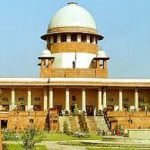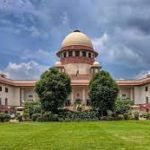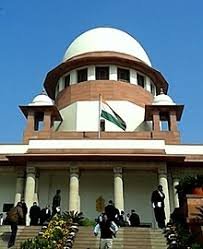
In the case of State of Uttar Pradesh v. A.K. Gaba Etc. (2026 INSC 568), the Supreme Court of India dismissed a batch of criminal appeals filed by the State against an order of the Allahabad High Court (Lucknow Bench) which had acquitted three Central Excise officials. The respondents (A.K. Gaba, Alok Gupta, and R.K. Srivastava) had originally been convicted by a Trial Court for bribery under Sections 7 and 13(1)(d) read with Section 13(2) of the Prevention of Corruption Act, 1988. The Supreme Court upheld the High Court’s order of acquittal, emphasizing that the Trial Court’s judgment was heavily flawed, lacking examination of cross-examinations and resting on mere presumptions. The Court reaffirmed the strict position of law that a prior demand for bribe money is a sine qua non (indispensable essentiality) for a conviction under the Prevention of Corruption Act, and without cogent, corroborative proof of such a demand, the accused are entitled to an acquittal.
1. Factual Background of the Case
- The Incident: On January 5, 1995, R.K. Srivastava (Superintendent, Central Excise), along with A.K. Gaba and Alok Gupta (both Inspectors, Central Excise), visited the premises of $M/s$ Prime Products at Kursi Road, Barabanki, and also inspected an adjoining factory, $M/s$ Amoli Ceraplast Ltd.
- The Allegations: It was alleged that the officials intercepted operations or raised tax issues to demand and secure bribe money from the complainant, Kuldeep Tewari.
- Trial Court Conviction: Following a criminal trial, the learned Trial Judge, by a judgment dated July 26, 2014, convicted the accused officials for offences punishable under Sections 7 and 13(1)(d) read with Section 13(2) of the Prevention of Corruption Act, 1988.
2. Procedural History
- High Court Appeal: The three convicted respondents preferred separate criminal appeals (Criminal Appeal Nos. 963, 964, and 963 of 2014) before the High Court of Judicature at Allahabad, Lucknow Bench.
- High Court Judgment: On May 27, 2019, the High Court allowed all three appeals, overturned the convictions, and fully acquitted the respondents of all charges.
- Supreme Court Appeal: Aggrieved by the acquittals, the State of Uttar Pradesh approached the Supreme Court via Criminal Appeal Nos. 3383-3385 of 2025.
3. Key Flaws Identified in the Trial Court’s Judgment
The Supreme Court noted several structural and legal infirmities in the original conviction order passed by the Trial Court:
- Concealment of Material Evidence: The prosecution concealed vital evidence—specifically a tape recorder containing purported recordings—which caused grave injustice to the appellants.
- Failure to Appreciate Cross-Examination: The Trial Judge completely failed to discuss or analyze the details of the cross-examination conducted by the defense on the prosecution witnesses. The Supreme Court observed that omitting the evidence emerging from cross-examinations denies natural justice to the accused and results in an erroneous judgment.
- Reliance on Speculation and Presumption: The Trial Court’s findings were heavily speculative. The Judge repeatedly used conjectural terms such as “Sambhavtah” (probably) and “Prateet hota hai” (it appears) to presume facts, such as why the complainant did not initially implicate certain appellants. The Court ruled that such a foundational reliance shakes the confidence of the justice system, as criminal guilt must be proved “up to the hilt” using cogent and corroborative evidence.
4. Established Legal Principles Enforced
- Demand as a Sine Qua Non: The Supreme Court heavily reiterated the settled position of law regarding corruption cases: a demand for bribe money is an absolute prerequisite to convict an accused under Sections 7 and 13(1)(d) of the Prevention of Corruption Act.
- Permeating Mandate: The proof of an initial demand is an indispensable essentiality and a permeating mandate. In the absence of definitive proof that a demand was made, the subsequent recovery of money, on its own, cannot sustain a criminal conviction.
5. Final Verdict
The Supreme Court concluded that the High Court was entirely justified in setting aside the speculative and procedurally defective order of the Trial Court. Finding no merit in the State’s appeals, the Bench, led by Justice Prasanna B. Varale, dismissed the appeals and affirmed the acquittal of the respondents.
2026 INSC 568
State of Uttar Pradesh V. A.K.Gaba Etc. (D.O.J. 27.05.2026)