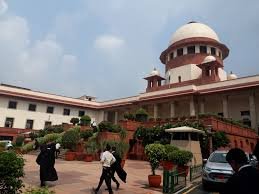
In the case of Ashwini Kumar Upadhyay v. Union of India & Ors. (2026), the Supreme Court of India addressed a batch of petitions and appeals concerning the legal framework for addressing hate speech and rumor-mongering, ultimately ruling that the existing laws are adequate but require consistent enforcement.
Core Legal Issues and Findings
The Court analyzed several key constitutional and procedural questions:
- Judicial Restraint in Creating Offences: The Court held that it cannot create or expand criminal offences or prescribe punishments in the absence of legislative action. Such an exercise would violate the Doctrine of Separation of Powers, as the authority to define crimes lies exclusively with the Legislature.
- Sufficiency of Existing Laws: The Court found that the existing substantive criminal law (including the IPC and now the Bharatiya Nyaya Sanhita) is not “unoccupied.” Provisions such as Sections 153A, 153B, 295A, and 505 of the IPC provide a comprehensive framework to penalize acts that promote enmity or outrage religious sentiments. The grievance, therefore, stems from selective or delayed enforcement rather than a lack of law.
- Procedural Remedies for FIRs: The Court reaffirmed that the CrPC (now BNSS) provides efficacious, multi-tiered remedies for citizens when police fail to register an FIR, including approaching a Superintendent of Police or a Magistrate. It emphasized that the registration of an FIR is mandatory when information discloses a cognizable offence.
- Rejection of Continuing Mandamus: The Court declined to issue a “continuing mandamus” for constant judicial monitoring of hate speech incidents. It noted that assuming a role of continuous oversight would amount to “micro-management” and an impermissible expansion of judicial power into the executive and legislative domains.
Prior Sanction and Section 156(3) CrPC
A significant portion of the judgment addressed whether “prior sanction” from the government is required before a Magistrate can order the registration of an FIR or an investigation under Section 156(3) of the CrPC. The Court ruled that:
- The requirement for sanction under Sections 196 or 197 of the CrPC operates only at the stage of “taking cognizance” by a court.
- It is not a condition precedent for the registration of an FIR or the conduct of an investigation.
- The High Court erred in quashing proceedings solely on the ground that prior sanction had not been obtained at the threshold stage.
The Constitutional Value of ‘Fraternity’
The Court concluded with an “ode to Fraternity,” describing it as a sine qua non for a cohesive society. It noted that hate speech is fundamentally antithetical to the constitutional value of fraternity and strikes at the moral fabric of the Republic. While the law provides mechanisms to address such conduct, the Court observed that the most enduring safeguard is the “collective constitutional conscience of society.”
Final Directions
The Court dismissed the writ petitions but partly allowed a criminal appeal to clarify that prior sanction is not required for a Magistrate to direct an investigation. It also closed several contempt petitions, finding that either compliance had been effected or no willful disobedience was established. All High Courts were directed to consider the feasibility of issuing practice directions to ensure the law declared in this judgment is fully implemented.
2026 INSC 432
Ashwini Kumar Upadhyay V. Union Of India & Ors. (D.O.J. 29.04.2026)