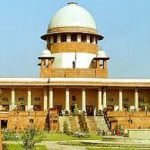
In the case of M.C. Mehta v. Union of India (2026), the Supreme Court of India formally disposed of one of its longest-standing environmental petitions (Writ Petition (Civil) No. 13029/1985) to transition its diverse air pollution issues into five new, specialized suo moto proceedings.
Background and Evolution
Originally filed in 1985 to target specific polluting industries in the National Capital Region (NCR), the case evolved over decades into a broad supervisory role for the Court. It facilitated major environmental reforms, including the introduction of Bharat Stage Emission Standards (BSES), the relocation of polluting power plants, and the establishment of the Commission for Air Quality Management (CAQM).
The Need for Restructuring
The Court noted that the case had witnessed a “rapid expansion in scope,” leading to a massive volume of Interlocutory Applications (IAs). This “inflation in the issues” created significant administrative difficulties and reduced judicial efficiency. To ensure each facet of air pollution is dealt with in-depth, the Court determined that an organized system of specialized cases was necessary.
The Five New Suo Moto Cases
While formally closing the 1985 petition, the Court directed the Registry to register five new Suo Moto Writ Petitions (Civil) to handle the surviving issues:
- Regulatory and Policy Framework: Focusing on air quality governance, data accuracy, and enforcement.
- Vehicular Emissions and Pollution: Including issues related to public transport, fuel standards, and cleaner freight movement.
- Conservation and Enhancement of Green Cover: Covering tree cutting, the protection of the Ridge forest, and tree censuses.
- Pollution by Construction, Power Plants, and Industry: Addressing fuel transitions and industrial emission standards.
- Solid Waste Management and Burning of Crop Residue: Including stubble burning, landfill management, and firecrackers.
Procedural Directions and Transition
To clear the backlog of existing litigation, the Court issued several mandatory directions:
- Infructuous Applications: Advocates-on-Record (AORs) must inform the Registry by May 15, 2026, if their pending IAs have become infructuous; if they fail to do so, the applications will be presumed rendered infructuous.
- Transfer of Active Issues: Active IAs and related appeals requiring further consideration will be transferred to the respective new suo moto petitions.
- Preservation of Past Orders: The Court emphasized that the formal closure of the original petition does not dilute the force of previous orders and directions, which remain final and operative.
- Reporting Guidelines: To ensure timeliness, all future reports must be accompanied by a tabulated chart of findings and recommendations and must be circulated to stakeholders at least seven days before a hearing.
2026 INSC 383
M.C. Mehta V. Union of India And Others (D.O.J. 12.03.2026)