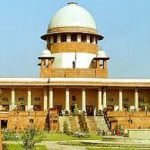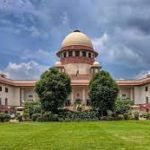
In the case of Bhartiya Mazdoor Sangh, U.P. & Anr. v. State of U.P. & Others (2026), the Supreme Court of India addressed a dispute spanning nearly four decades involving the unpaid wages of thousands of workers from a defunct industrial conglomerate.
The following is a summary of the judgment:
Case Background
The litigation centers on M/s Jaipur Udyog Ltd. (JUL) and its units, including a cement factory in Rajasthan and a jute mill in Kanpur. JUL was declared a “sick industry” in 1987. For over thirty years, various rehabilitation schemes proposed by Gannon Dunkerley & Co. Ltd. (GDCL), the promoter, failed to revive the units, which remained closed and non-functional. The primary objective of the present writ petition was to secure the long-overdue wages and dues of the workmen.
Key Findings and Observations
The Court scrutinized the “checkered history” of the case and made the following determinations:
- Unauthorized Conduct of GDCL: The Court found that GDCL, while ostensibly managing JUL, acted as a “self-styled owner”. GDCL clandestinely changed the shareholding patterns of JUL’s subsidiary, M/s Jai Agro Industries Ltd. (JAIL), and sold off substantial assets—including the Kanpur Jute Mill and various agricultural lands—without seeking the mandatory permission of the Court or the relevant authorities.
- Impossibility of Revival: The Court concluded that the physical revival of the units as they once existed is a “factual impossibility”. The technology is obsolete, the machinery has rusted, and the mining land required for the cement unit is now a notified forest area where mining is prohibited.
- Rejection of New Investment Proposals: During the proceedings, new investors (M/s Frost Realty LLP and M/s Dickey Asset Management) proposed revival schemes. The Court rejected these as “last-minute” attempts that lacked proper valuation of assets and offered settlement terms (such as small plots of land) that were deemed unacceptable for the welfare of the workers.
- Financial Status of GDCL: The Court noted that GDCL itself is in severe financial distress, with its accounts declared as Non-Performing Assets (NPA), casting further doubt on its ability to implement any revival plan.
Reliefs and Directions
Exercising its powers under Article 142 of the Constitution to provide a final resolution, the Court issued the following directions:
- Workmen Dues Verification: The Court ordered a time-bound exercise to identify all eligible workmen or their heirs to ensure they receive their dues by August 31, 2026.
- Asset Inventory and Valuation: An official inventory and valuation of all remaining assets of JUL and its subsidiary JAIL must be prepared to satisfy the remaining liabilities.
- Appointment of Court Administrator: The Court appointed Justice Manindra Mohan Shrivastava (former Chief Justice) as the Court Administrator to oversee the verification of claims and the valuation of assets.
- Handling of Past Sales: While the Court did not set aside the past sales of the Kanpur Jute Mill (to avoid “opening a new pandora’s box”), it directed that the sale proceeds be utilized for the workmen’s benefit. However, the sale of scrap from the Sawai Madhopur unit was set aside, and the buyer was ordered a refund.
- Closure of Winding-Up Proceedings: The Company Petition for winding up JUL pending in the Rajasthan High Court was disposed of as infructuous, given that the sale of assets has effectively cleared the company’s debts.
Conclusion
The Supreme Court prioritized the welfare of the workers over the commercial interests of the promoters and prospective bidders. By appointing a Court Administrator and setting strict timelines, the Court aimed to finally close a decades-long struggle for labor justice.
2026 INSC 364
Bhartiya Mazdoor Sangh, U.P. & Anr. V. State of U.P. & Others (D.O. J. 15.04.2026)